
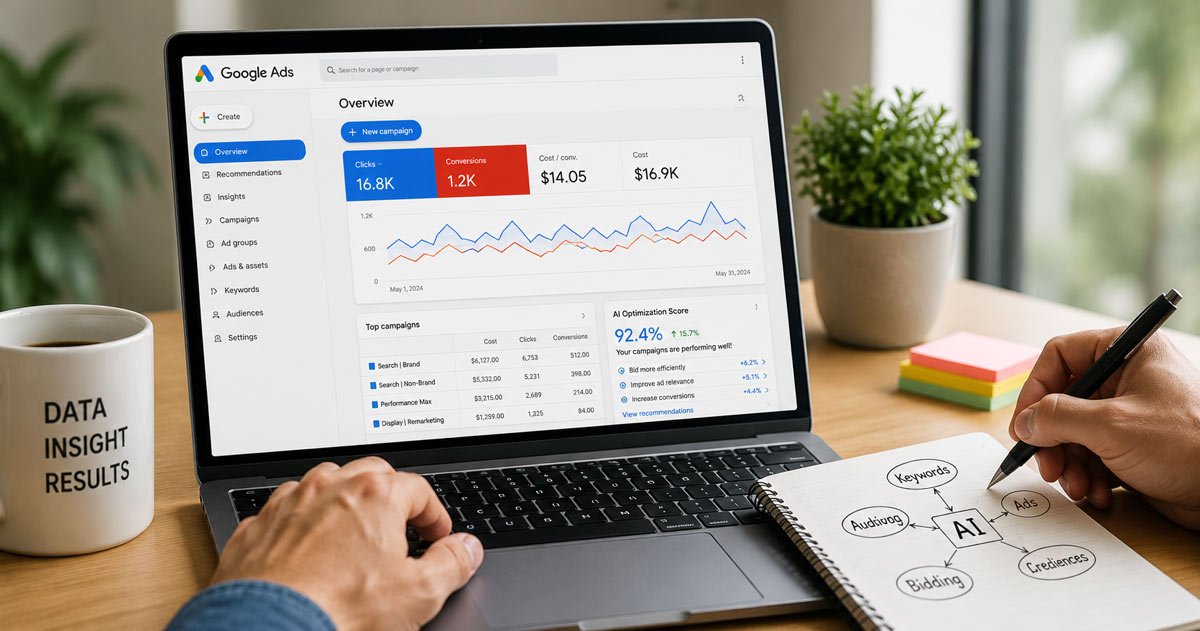
In the fast-changing world of pay-per-click advertising, businesses in Jupiter, Florida are under increasing pressure to create ads that are faster, smarter, and more personalized. AI-driven creative tools can help by generating ad variations, testing new messaging angles, and improving campaign efficiency at scale. However, speed should not come at the expense of accuracy, authenticity, or compliance.
For local brands, the most effective PPC campaigns still need a human strategy behind them. AI can support creative development, but it should not exaggerate claims, misrepresent services, or produce messaging that feels disconnected from the business’s actual voice. Responsible AI use means balancing automation with oversight, ensuring every ad reflects the brand, follows platform policies, and speaks honestly to the audience.
This article explores how businesses can use AI in PPC advertising without losing trust. We’ll look at how AI can improve creative testing, where human review remains essential, and how Jupiter businesses can build campaigns that are both performance-driven and ethically sound.
Why Does PPC Need Its Own AI Ethics Framework?
As AI becomes more integrated into PPC advertising, the need for a dedicated ethics framework becomes apparent to address unique challenges in this field.
Understanding the Unique Challenges of PPC
PPC advertising moves faster than traditional brand marketing. Campaigns often require multiple headlines, descriptions, visuals, landing page tests, audience variations, and platform-specific creative assets. For businesses in Jupiter, this means ads must be produced quickly while still feeling accurate, local, and consistent with the brand.
AI can help support this pace by generating creative concepts, resizing assets, testing message variations, and identifying new angles for different audiences. However, PPC also comes with a higher risk of over-editing. An AI-generated image, claim, or ad variation may improve attention, but it can also misrepresent the business, exaggerate results, or create an experience that does not match the landing page.
That is why PPC needs a clear framework for responsible AI use. Every AI-assisted ad should be reviewed for accuracy, brand fit, audience relevance, and platform compliance before it goes live. The goal is not simply to produce more ads. The goal is to create better-performing campaigns that remain honest, trustworthy, and aligned with the business behind them.
The Role of AI in PPC
AI is becoming a bigger part of PPC campaign development. Platforms like Google Ads now use automation to support ad creation, asset testing, audience targeting, bidding, and performance optimization. These tools can help advertisers produce more creative variations faster, including lifestyle-style visuals, product-focused imagery, and ad copy tailored to different search or audience intent.
However, AI should not be treated as a replacement for strategy or human review. When AI is used to create or modify ad assets, there is a risk that the final ad may look too polished, imply a result that is not typical, or show people, locations, or services in a way that does not accurately represent the business. For local brands, that can weaken trust quickly.
A responsible AI framework helps advertisers decide what is acceptable before campaigns go live. The key question is not just whether AI can create the ad, but whether the ad is truthful, relevant, compliant, and consistent with the real customer experience. Used correctly, AI can improve PPC performance without sacrificing brand credibility.
What Are the Levels of AI Manipulation in PPC?
Understanding the different levels of AI manipulation in PPC advertising can help businesses use AI responsibly while protecting consumer trust. Not all AI-assisted edits carry the same level of risk. Some simply improve image quality or efficiency, while others can significantly alter perception and create compliance concerns. Recognizing these differences allows advertisers to balance creativity with transparency.
Level 1: The Core (Zero Risk)
Level 1 represents the lowest-risk use of AI in PPC and focuses on technical enhancements rather than changing reality. At this stage, AI is used to improve the presentation of an asset without altering what is actually being shown. Examples include lighting adjustments, background cleanup, color correction, sharpening low-quality images, cropping for ad placements, or resizing creative for different platforms.
These edits are generally designed to improve clarity and consistency while keeping the underlying product, service, or scene truthful. For example, enhancing brightness on a photo of a local business or sharpening an image for display on Google Ads would typically fall into this category.
Businesses in highly regulated sectors, such as legal, healthcare, financial services, and insurance, often rely heavily on Level 1 AI usage because maintaining factual accuracy and consumer trust is critical. Conservative AI use can also reduce the risk of violating advertising policies or creating unrealistic expectations.
At its best, Level 1 AI functions as an optimization tool rather than a creative replacement. The objective is simple: improve presentation while preserving authenticity.
Level 2: The Inner Ring (Low Risk)
Level 2 AI manipulation extends beyond technical cleanup and begins enhancing the environment surrounding the product, service, or subject being advertised. The core offering remains unchanged, but AI is used to improve context, presentation, or visual appeal. Examples may include adjusting backgrounds, creating more polished lifestyle settings, removing distractions, or adapting creative assets to fit different audiences and placements.
At this level, the intent is typically to improve engagement rather than alter reality. For example, a pool company may place an image of its work into a cleaner outdoor setting, or a local service business might use AI to create a more cohesive scene around an actual project photo. The advertised service itself remains accurate, but the surrounding presentation becomes more curated.
Although the risk remains relatively low, perception becomes more important. Consumers are increasingly aware of AI-generated imagery, and overly polished or unrealistic environments can sometimes reduce trust, even when the underlying product or service is genuine. The challenge for advertisers is ensuring enhancements support the message rather than distract from it.
For PPC campaigns, Level 2 AI should still prioritize authenticity. The environment can be improved, but the ad should continue to reflect the real customer experience. A useful guideline is to ask: Would a reasonable consumer feel misled if they encountered the actual business, product, or service after seeing this ad? If the answer is no, the creative likely remains within a responsible, low-risk range.
The purpose of Level 2 AI is not to manufacture perfection. It is to improve clarity, relevance, and visual appeal while preserving the trust that drives long-term advertising performance.
Level 3: The Outer Ring (High Risk)
Level 3 AI manipulation moves beyond enhancement and into significant modification of how a product, service, or person is presented. At this stage, AI may alter features in ways that create an impression that differs meaningfully from reality. Examples include removing visible imperfections, dramatically improving before-and-after results, changing physical characteristics, exaggerating product performance, or creating highly polished visuals that do not accurately represent the actual customer experience.
The risk at this level increases because consumer expectations can be influenced by imagery or messaging that is technically possible to create but may not be achievable in real life. For example, enhancing a home service result beyond what was delivered, altering a person’s appearance in a testimonial image, or creating unrealistic representations of outcomes can lead to trust issues and, in some cases, advertising policy violations.
For businesses operating in regulated industries such as healthcare, legal services, finance, or wellness, Level 3 AI use requires particularly careful oversight. Misleading claims or unrealistic portrayals can create compliance concerns in addition to reputational risk. Even outside regulated sectors, consumers are increasingly sensitive to overly manipulated advertising and may question the authenticity of brands that appear inauthentic.
Before using Level 3 AI enhancements in PPC campaigns, advertisers should ask several questions:
- Does this edit materially change how a customer would perceive the product or service?
- Would a reasonable consumer expect the advertised result in reality?
- Could this creative be interpreted as misleading or exaggerated?
- Does the ad remain compliant with platform advertising policies?
As AI capabilities become more advanced, the line between optimization and manipulation becomes easier to cross. The strongest PPC campaigns do not simply maximize attention — they build long-term trust. In many cases, preserving authenticity will outperform highly manipulated creative over time because consumers are more likely to engage with brands they perceive as credible and transparent.
Level 4: The Edge (key Risk)
Level 4 represents the highest level of AI manipulation in PPC advertising, where creative assets move beyond enhancement and into fully synthetic generation. At this stage, AI may produce entirely fabricated environments, people, products, testimonials, or scenarios that have little or no connection to reality. While these assets can be visually impressive and useful for concept development or creative experimentation, they carry significant ethical, compliance, and reputational risks when used in live advertising.
Examples of Level 4 manipulation may include generating fictional customers, creating products or results that do not exist, producing entirely synthetic service experiences, or building idealized scenes designed solely to increase engagement. The concern is not the use of AI itself, but whether consumers could reasonably believe the imagery represents a real experience, outcome, or offering.
For advertisers, the risk at this level is substantial. Fully synthetic creative can weaken brand credibility, trigger consumer skepticism, and potentially violate advertising policies if the content is interpreted as deceptive or misleading. In local service industries especially, trust often drives conversion decisions. A disconnect between the advertisement and the real customer experience can negatively affect long-term brand perception.
That does not mean Level 4 AI has no value. Synthetic creative can support internal concept testing, rapid prototyping, audience experimentation, or early-stage campaign development. However, businesses should exercise caution before allowing heavily AI-generated assets to become the primary representation of their brand.
Before deploying Level 4 AI creative, advertisers should consider:
- Does this imagery accurately reflect the business, product, or service being promoted?
- Could a consumer mistake synthetic content for a real experience or outcome?
- Is the ad setting unrealistic expectations?
- Would this creative strengthen or weaken trust in the brand over time?
The most sustainable PPC strategies balance innovation with authenticity. AI can accelerate creativity, but trust remains difficult to build and easy to lose. As AI-generated advertising becomes more common, brands that prioritize transparency and realistic representation may gain a competitive advantage over those relying heavily on synthetic perfection.
How Can Brands Align with Their North Star?
AI can help brands move faster, but it should not change what the brand stands for. In PPC, a brand’s “North Star” is the standard that keeps advertising honest, recognizable, and aligned with the customer experience. Before using AI-generated copy, images, or campaign variations, businesses should define what they will and will not allow in their advertising.
Defining Brand Integrity
Brand integrity starts with clear boundaries. A business should know which claims, visuals, offers, and messages accurately reflect who they are and what they can deliver. These standards should guide every AI-assisted asset before it reaches a live campaign.
For PPC, this means creating internal rules around what cannot be exaggerated, fabricated, or visually manipulated. A brand may decide that AI can improve lighting, resize images, or suggest headlines, but it cannot invent customer outcomes, create fake testimonials, alter real people, or show services the business does not provide.
These guidelines help keep campaigns consistent across Google Ads, Meta, landing pages, and display placements. They also give teams a practical review process: does this ad match the brand, respect the audience, and reflect the real customer experience? When the answer is yes, AI becomes a tool for stronger performance rather than a risk to trust.
Operationalizing Brand Integrity
Brand integrity needs to be built into the PPC workflow, not reviewed as an afterthought. A practical way to do this is by creating a clear approval process for AI-assisted ads before they go live. This process should define who reviews the creative, what standards they are checking against, and which types of AI edits require extra scrutiny.
For example, low-risk edits such as resizing, cropping, or lighting adjustments may only need a quick review. Higher-risk assets, such as AI-generated people, dramatic product enhancements, or synthetic lifestyle scenes, should require a deeper review for accuracy, policy compliance, and brand fit.
Human oversight is essential. AI can generate options, but people should decide what accurately represents the business. Teams should ask whether the ad reflects the real customer experience, whether the claims are supportable, and whether the visual presentation feels consistent with the brand’s voice and values.
By turning brand integrity into a repeatable PPC process, businesses can use AI more confidently. The goal is to move faster without weakening trust, creating campaigns that are efficient, compliant, and aligned with the brand’s North Star.
What Does the PPC Community Think?
The PPC industry remains divided on how aggressively AI should be used in advertising. While many marketers view AI as a valuable tool for improving efficiency, reducing production time, and testing creative at scale, others are more cautious about the long-term impact on authenticity, trust, and brand differentiation.
Community Perspectives on AI in PPC
Supporters of AI in PPC often point to its ability to accelerate campaign development. AI can help generate multiple ad variations, identify audience patterns, optimize bidding strategies, and streamline creative testing. For agencies and businesses managing large campaign volumes, these efficiencies can translate into faster iteration cycles and potentially improved performance.
However, there is also growing concern within the PPC community about overreliance on automation. Some marketers argue that AI-generated creative risks producing repetitive messaging, unrealistic imagery, or generic campaigns that lack the nuance of human strategy. Others worry that excessive AI use may reduce brand uniqueness over time as more advertisers rely on similar tools and prompts.
A recurring theme in industry discussions is that AI performs best as an assistant rather than a replacement. Many experienced PPC professionals advocate for a hybrid approach: using AI to improve speed and support decision-making while keeping human oversight responsible for strategy, creative direction, compliance, and quality control.
The broader consensus emerging within the PPC space is not whether AI should be used, but how it should be used responsibly. The brands likely to benefit most are those that balance automation with authenticity, using AI to enhance campaign performance while maintaining the trust and transparency consumers increasingly expect.
Addressing Concerns and Feedback
As AI becomes more integrated into PPC advertising, brands should expect questions about authenticity, transparency, and how AI-generated assets are being used. Addressing these concerns proactively can help strengthen consumer trust while improving long-term campaign performance.
Listening to feedback from customers, industry peers, and the broader PPC community provides valuable insight into how AI-assisted advertising is perceived. Concerns around unrealistic imagery, exaggerated claims, or overly automated messaging can highlight areas where campaigns may need stronger oversight or clearer brand guidelines.
For advertisers, feedback should not be viewed as resistance to innovation. Instead, it can serve as a quality control mechanism that helps identify gaps between AI-generated creative and real-world customer expectations. Repeated concerns about authenticity or trust may indicate the need to revisit approval processes, creative standards, or AI usage policies.
Ongoing evaluation is equally important from a compliance perspective. Advertising platforms continue to update policies around misleading content, synthetic media, and manipulated imagery. Brands that actively monitor feedback and adjust their approach may be better positioned to maintain compliance while protecting their reputation.
The most effective PPC strategies are often iterative. By combining AI capabilities with human judgment and community input, businesses can create campaigns that evolve over time while remaining aligned with consumer expectations, platform requirements, and brand values.
Balancing Innovation with Authenticity
The strongest PPC strategies recognize that innovation and authenticity are not opposing forces. AI can accelerate creative testing, generate campaign variations, improve targeting, and support optimization at a scale that would be difficult to achieve manually. However, speed alone does not create effective advertising.
Brands should treat AI as an enhancement tool rather than a substitute for strategic thinking. Every AI-assisted asset should support a genuine customer experience and accurately reflect the business behind the advertisement. A useful principle is to ask: Does this creative improve communication, or does it create expectations the business cannot realistically meet?
Authenticity becomes increasingly valuable as consumers grow more aware of AI-generated content. Campaigns that remain transparent, accurate, and aligned with real-world experiences may build stronger trust over time than those relying heavily on artificial perfection.
Implementing Human-in-the-Loop Protocols
Human oversight remains one of the most important safeguards in AI-assisted PPC. While AI can generate ideas, optimize assets, and identify opportunities, people should remain responsible for evaluating accuracy, context, compliance, and brand alignment.
A human-in-the-loop process introduces structured review points before campaigns go live. For example:
- Low-risk AI edits (cropping, resizing, lighting adjustments) may require minimal approval.
- Moderate-risk enhancements (background changes, lifestyle scene improvements, AI-generated variations) should be reviewed for authenticity and consistency.
- High-risk modifications (synthetic people, exaggerated outcomes, fully generated scenes) should undergo rigorous evaluation for consumer perception, compliance, and reputational risk.
This layered approach allows businesses to benefit from AI efficiencies without losing control over quality or messaging.
Ultimately, mastering AI in PPC is not about choosing between automation and human expertise. It is about combining both effectively. Brands that create clear standards, maintain oversight, and prioritize authenticity may be better positioned to leverage AI as a competitive advantage while preserving the trust that drives sustainable growth.
Frequently Asked Questions
What is the role of AI in PPC advertising?
AI plays a significant role in PPC advertising by enabling the rapid generation of ad variations and creative content. It helps advertisers meet the high demand for fresh imagery across multiple channels. However, the use of AI must be balanced with ethical considerations to ensure that ads remain authentic and policy-compliant.
How can brands ensure their PPC ads remain authentic?
Brands can maintain authenticity in their PPC ads by adhering to a structured AI ethics framework. This involves defining clear guidelines for AI usage, implementing human oversight, and aligning creative efforts with brand values. By doing so, brands can leverage AI’s capabilities while preserving consumer trust.
What are the risks of using AI-generated content in PPC?
Using AI-generated content in PPC carries several risks, including potential policy violations and consumer deception. The risk increases with the level of manipulation, from technical refinements to full fabrications. Brands must carefully assess these risks and implement strategies to mitigate them.
Why is an AI ethics framework necessary for PPC?
An AI ethics framework is essential for PPC because it addresses the unique challenges of high-volume ad production in this space. It provides guidelines for responsible AI usage, ensuring that ads remain truthful and compliant with platform policies, ultimately protecting brand reputation.
How does AI affect consumer trust in PPC ads?
AI can impact consumer trust in PPC ads, especially if the content appears artificial or deceptive. While AI offers efficiency, its use must be transparent and aligned with consumer expectations. Brands that prioritize authenticity can maintain trust even as they adopt AI-driven tools.
What is the ‘brand integrity circle’ in PPC?
The ‘brand integrity circle’ is a framework that helps brands maintain consistency and authenticity in their PPC campaigns. It involves setting clear guidelines, involving human oversight, and ensuring that all AI-generated content aligns with the brand’s core values and customer expectations.
How can brands balance AI innovation with ethical concerns?
Brands can balance AI innovation with ethical concerns by implementing a structured approach that includes human oversight and clear guidelines. This ensures that AI tools are used responsibly, enhancing creative efforts without compromising authenticity or consumer trust.
What are the potential consequences of AI misuse in PPC?
Misuse of AI in PPC can lead to significant consequences, including policy violations, consumer deception, and reputational damage. Brands must carefully navigate the use of AI tools, ensuring that their campaigns remain truthful and aligned with ethical standards to avoid these pitfalls.
What Are the Key Takeaways?
- AI tools offer efficiency in generating PPC ad variations but require careful ethical consideration.
- A structured AI ethics framework is essential for maintaining authenticity and policy compliance.
- Brands must balance innovation with consumer trust by aligning AI usage with core values.
- Human oversight and clear guidelines are essential for responsible AI implementation in PPC.
In summary, the responsible use of AI in PPC involves adhering to ethical guidelines and maintaining a balance between innovation and authenticity. By implementing a structured framework, brands can leverage AI’s capabilities while preserving consumer trust.
How Can Riley Summers Marketing Group Help You?
Riley Summers Marketing Group is committed to helping brands navigate the complexities of AI in PPC advertising. By providing expert guidance and tailored strategies, we ensure that your campaigns remain both innovative and authentic. Contact us today to learn how we can enhance your PPC efforts while maintaining the integrity of your brand.

About The Author
Mark Riley is a marketing executive specializing in PPC, Local SEO, Search Intelligence, AI-driven search visibility, and digital growth strategies for service-based businesses. With more than 15 years of experience managing campaigns and marketing operations across highly competitive industries, he has overseen digital advertising initiatives ranging from local lead generation campaigns to multi-million-dollar monthly media budgets. His work focuses on helping businesses improve visibility across Google Search, Google Maps, AI-powered search experiences, and conversion-driven digital marketing channels.