
Search is changing again. But this time, it is not just Google evolving. It is the interface itself.
For years, digital advertising revolved around rankings, keywords, blue links, and traditional search behavior. Now, platforms like OpenAI are rapidly moving toward conversational discovery, AI-assisted recommendations, integrated shopping experiences, and eventually, native advertising inside AI-generated responses. Recent developments show that ChatGPT ads are no longer theoretical. OpenAI has already begun testing advertising formats, product discovery experiences, and self-serve advertiser tools inside ChatGPT.
This matters because the shift is bigger than “another ad platform.” It changes how users discover businesses, how trust is established, and how purchase decisions are influenced. Instead of typing fragmented searches into Google, users are increasingly asking AI platforms direct questions and receiving synthesized answers, recommendations, comparisons, and buying guidance in a single interaction. That creates an entirely new environment for visibility, advertising, and customer acquisition.
In this article, we break down what ChatGPT ads currently look like, what OpenAI appears to be building next, and why marketers, agencies, and business owners should pay close attention to how AI platforms are beginning to reshape the future of digital advertising.
What Are ChatGPT Ads?
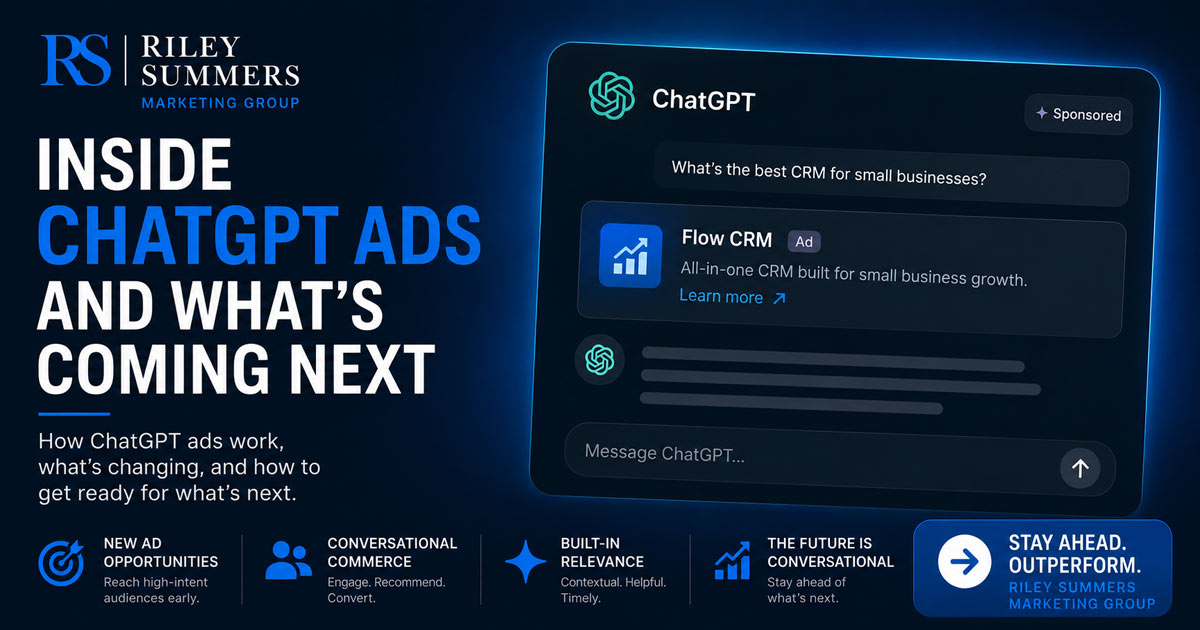
ChatGPT ads are a novel advertising format integrated within the ChatGPT platform, appearing inline within conversation responses. These ads are designed to engage users who are already in a research or decision-making phase, providing a seamless advertising experience. Unlike traditional search ads, ChatGPT ads feature a concise format with a headline, short body copy, and a destination link, without additional sitelinks or extensions.
How Do ChatGPT Ads Appear?
ChatGPT ads are displayed alongside AI-generated responses when users inquire about topics with commercial intent. For instance, queries like “best weekend getaway” may trigger a sponsored result labeled “Sponsored.” This placement ensures that ads are seen by users who are actively seeking information, enhancing the likelihood of engagement.
Why Are ChatGPT Ads Important for Your Business?
ChatGPT ads present a unique opportunity for businesses to reach potential customers in a conversational context, where users are more engaged and closer to making a purchase decision. The format allows brands to craft messages that resonate with the user’s intent, potentially increasing conversion rates. Additionally, the early adoption of this format can provide a competitive edge in a less saturated advertising landscape.
Where Are ChatGPT Ads Expanding Next?
As ChatGPT ads gain traction, their reach is set to expand beyond the U.S. to new international markets.
Currently, ChatGPT ads are limited to the U.S., but OpenAI has plans to expand to Australia, New Zealand, and Canada. The UK is also expected to see these ads by mid-May. This expansion indicates a growing opportunity for businesses to leverage ChatGPT ads in new markets, reaching a broader audience.
When Should You Adopt ChatGPT Ads?
Timing is key when it comes to adopting new advertising formats, and ChatGPT ads are no exception.
Businesses should consider adopting ChatGPT ads now to capitalize on the early-stage opportunities this format offers. By establishing a presence early, brands can learn the nuances of the platform, optimize their creative strategies, and gain insights into competitor activities. This proactive approach can provide a significant advantage as the platform continues to grow and evolve.
Frequently Asked Questions
What makes ChatGPT ads different from traditional search ads?
ChatGPT ads differ from traditional search ads in their placement within conversational responses rather than search results. This format engages users who are already in a decision-making process, offering a more integrated and potentially effective advertising experience.
How can businesses optimize their ChatGPT ads?
To optimize ChatGPT ads, businesses should focus on crafting messages that align with the conversational nature of the platform. This includes using specific value propositions, low-friction offers, and ensuring the ad content mirrors the user’s intent and context.
What is the “Double Parked” phenomenon in ChatGPT ads?
The “Double Parked” phenomenon refers to instances where a single brand appears twice within the same ChatGPT response. This occurrence raises questions about ad visibility and frequency, highlighting the importance of strategic ad placement to dominate conversations.
What insights does Adthena’s ChatGPT Ads Intelligence provide?
Adthena’s ChatGPT Ads Intelligence offers insights into ad performance, including metrics like ad presence rate, top-performing intent groups, and competitor analysis. This tool helps businesses understand their competitive landscape and optimize their ChatGPT ad strategies effectively.
How does the expansion of ChatGPT ads impact global marketing strategies?
The expansion of ChatGPT ads into new markets like Australia, New Zealand, and Canada provides businesses with opportunities to reach international audiences. This expansion necessitates adapting marketing strategies to align with regional preferences and consumer behaviors.
What are the benefits of early adoption of ChatGPT ads?
Early adoption of ChatGPT ads allows businesses to gain a foothold in a less competitive environment, test creative strategies, and gather valuable data on user engagement. This early involvement can lead to a better understanding of the platform and a stronger competitive position as the market matures.
How does the conversational format of ChatGPT ads affect user engagement?
The conversational format of ChatGPT ads enhances user engagement by integrating ads into the natural flow of information retrieval. This approach captures the user’s attention when they are most receptive, potentially leading to higher engagement and conversion rates.
What role does context play in the effectiveness of ChatGPT ads?
Context plays a essential role in the effectiveness of ChatGPT ads, as users are already engaged in a specific inquiry. Ads that reflect the user’s intent and provide relevant information are more likely to resonate and drive action, making context a key factor in ad success.
Key Takeaways
Summarizing the main points, these key takeaways offer a concise overview of ChatGPT ads’ potential.
- ChatGPT ads offer a unique, conversational advertising format that engages users in decision-making phases.
Early adoption provides a competitive advantage in a less saturated market.
Adthena’s ChatGPT Ads Intelligence provides valuable insights into ad performance and competitor activities.
Expansion into new markets presents opportunities for global audience reach.
These key takeaways highlight the potential of ChatGPT ads to transform advertising strategies by engaging users in a more integrated and contextually relevant manner. Businesses can leverage these insights to optimize their campaigns and gain a competitive edge.
How Can Riley Summers Marketing Group Help?
Discover how Riley Summers Marketing Group can support your business in navigating the ChatGPT ads landscape.
Riley Summers Marketing Group is poised to assist businesses in navigating the evolving landscape of ChatGPT ads. By leveraging our expertise, businesses can optimize their ad strategies to align with the conversational nature of the platform. Our team provides insights and tools to ensure your brand remains competitive and relevant. Contact us today to learn how we can enhance your advertising efforts and drive success in this new frontier.

About The Author
Mark Riley is a marketing executive and the founder of Riley Summers Marketing Group, where he leads customer acquisition strategy for home services businesses across paid search, Google Local Services Ads, local SEO and paid social media. He rose to VP of Digital at a national legal-marketing agency, where the digital programs he led generated a significant share of its revenue. Over a 15+ year career, he has managed more than $70 million in digital advertising spend, much of it in one of the most expensive and competitive advertising categories in North America. He measures marketing by what it costs to win a booked job, not by traffic or lead volume.