
Trust & Verification After Storms in Florida
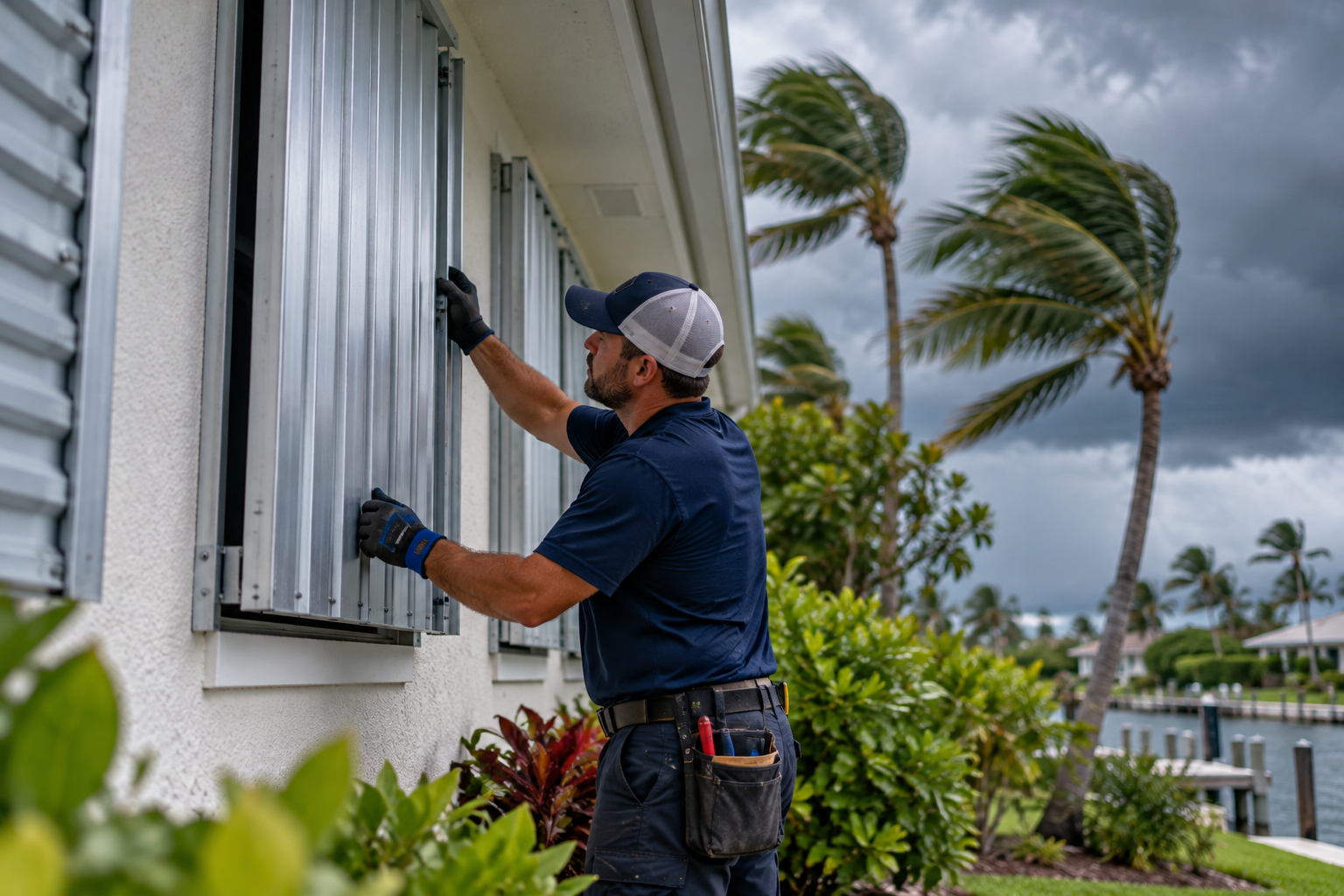
Trust and verification after storms is how a Florida home services business shows homeowners, at the moment they’re most cautious, that it is who it says it is. After a storm, homeowners need to know who they’re hiring before they let a contractor onto their property or sign anything, and many unfamiliar contractors arrive to compete for the work. A trustworthy business makes its license, insurance, local experience and identity easy to check for themselves. At Riley Summers, we put that evidence where homeowners make the decision, in the ads, on the landing page and on the Google Business Profile, and we keep storm advertising free of fear, pressure and promises the business can’t back up.
On this page
- Why Trust Matters More After a Storm
- Florida Rules That Shape Storm Trust Claims
- How We Make Trust Easy to Verify
- What a Homeowner Can Verify
- What It Means for the Business
- Related Resources
Why Trust Matters More After a Storm
After a storm, homeowners often need repairs before they’ve had time to research contractors the way they normally would. Their home is damaged, they’re under pressure, and waiting for recommendations or comparing several estimates may feel difficult when they need the work done.
Unfamiliar contractors arrive. Contractors from other parts of Florida and other states travel to storm-damaged areas to meet the demand. Many are properly licensed and do good work. Others aren’t. A homeowner looking at an unfamiliar list of businesses and advertisements may have little way of knowing which contractors they can trust without checking further.
The state warns homeowners to check. Florida’s Department of Business and Professional Regulation (DBPR) urges homeowners to ask for a contractor’s license information and verify it before hiring. The agency warns that unlicensed contracting can leave homeowners facing substandard work, missing permits, lost deposits and potential liability when a contractor lacks necessary insurance. Homeowners can check state-regulated licenses through the DBPR’s online license lookup.
The penalties increase during an emergency. Under Florida Statute 489.127, unlicensed contracting violations that would ordinarily be first-degree misdemeanors can become third-degree felonies when committed during a state of emergency declared by the Governor. The law applies to contracting activities requiring the appropriate license, including advertising those services without authorization.
Homeowners need proof, not promises. Saying a business is licensed, insured, experienced and local is easy. Showing homeowners how to confirm those claims is what makes them meaningful. After a storm, when unfamiliar contractors are competing for the same work, independently verifiable information gives homeowners a stronger basis for deciding whom to contact.
How Riley Summers helps: We make verification part of the marketing. We put credible, checkable information where homeowners encounter the business, reducing uncertainty and giving them a reason to make contact without relying on fear, pressure or unsupported promises.
Florida Rules That Shape Storm Trust Claims
Several Florida rules decide what a contractor can say in storm advertising, and what has to be said. We build them into the ads and landing pages before anything runs.
The license number in every ad. Florida requires certified and registered contractors to show their license number in every advertisement, in any medium. We cover this in our Regulations guide. After a storm, it’s also the simplest proof a homeowner can check, because the number in the ad is the one they type into the state lookup.
Rules on roof insurance claims. Florida law sets strict rules for contractors around roof-related insurance claims:
- An ad that encourages a homeowner to contact a contractor about a roof insurance claim must include three disclosures, in a set minimum font size: that the homeowner is responsible for the deductible, and that both waiving a deductible and filing a false claim are felony insurance fraud.
- Contractors can’t offer rebates, gifts, cash, coupons or deductible waivers to win a roof inspection or a claim.
- Contractors can’t interpret a homeowner’s policy or adjust their claim, unless they also hold a public adjuster license.
- A repair agreement requires a good-faith, itemized estimate.
- Homeowners who sign a roof contract within 180 days of a declared emergency can cancel it within a set period.
No pressure, no exaggeration. Google’s sensitive events policy restricts ads that exploit a disaster, and Florida’s price gouging law applies during a declared emergency. Both are covered in Advertising Through Hurricane Season.
How Riley Summers helps: Compliance is part of the build, not an afterthought. For roofing clients, any ad or landing page that mentions insurance claims carries the required disclosures at the required size before it runs. We never advertise inducements the law prohibits, and every ad carries the license number where the law requires it. Where a claim, credential or disclosure depends on the business, we use only what the business confirms.
How We Make Trust Easy to Verify
A homeowner shouldn’t have to go looking for proof that a business is legitimate. We put that proof where they make the decision, and make each piece something they can check for themselves.
A license they can look up. The business’s license number appears in every ad and on every landing page, where the business holds one, so a homeowner can check it in the state’s license lookup, confirming it’s active, in the right classification, and matches the business name.
Insurance they can see. Where the business provides it, the landing page states its general liability and workers’ compensation coverage, and how a homeowner can get proof of it before work starts.
A verifiable local presence. Not every legitimate business has a storefront, and Google requires many service-area businesses to hide their address. So local presence comes from things a homeowner can confirm: a local phone number, a clearly stated service area, an accurate Google Business Profile, and how long the business has served the area.
Google reviews that show the business’s local record. For most homeowners, the business’s Google reviews are the first proof they check. Reviews from local customers, especially recent reviews about storm work, show that the business is established in the area and has done this work before. Because the Google Business Profile is linked to the business’s Google Ads account and its Local Services Ads, its rating and reviews appear alongside the ads as well as in the map results. We advise businesses on keeping a steady flow of genuine reviews coming in, and can manage review requests and responses for them. We never use reviews the business can’t stand behind. Photos of completed local projects, and references where the business offers them, add to that record.
A consistent identity. The same business name, phone number and service area in the ads, on the landing page, on the Google Business Profile and across its directory listings, so every place a homeowner checks tells the same story.
Clear business practices. Where the business offers them, the landing page sets out how the work is quoted, such as written, itemized estimates, and what availability really looks like, so a homeowner isn’t promised a crew this week when the business is booked for three.
A third-party check. Businesses running Local Services Ads have passed Google’s screening, which in most home services categories includes background checks, insurance and state licenses where required, and can show the Google Verified badge. It’s a useful signal to add, but it doesn’t replace the state license lookup.
How Riley Summers helps: We turn the business’s credentials into evidence a homeowner can check in moments, placed in the ads, on the landing page and on the Google Business Profile, so a cautious homeowner has a reason to call.
What a Homeowner Can Verify, and What Should Raise Questions
Here’s what a cautious homeowner can check for themselves, and the signs that suggest checking further.
| What to check | Verifiable evidence | Reason to look closer |
|---|---|---|
| License | A license number that shows as active in the state lookup, in the right classification, under the business’s name | No number given, or one that doesn’t match the business |
| Insurance | Proof of current coverage, available before work starts | No proof offered when asked |
| Google reviews | A record of genuine reviews from local customers, including recent work | Few or no reviews, or reviews that don’t match the business’s claims |
| Local presence | A local phone number, a stated service area and an accurate Google Business Profile | No way to trace the business locally |
| Business identity | The same name and contact details everywhere | Conflicting or untraceable details |
| The estimate | Written, itemized scope and pricing | Vague terms, or pressure to sign on the spot |
Can homeowners check your business before they call?
Riley Summers will review your paid search campaigns and landing pages and show you whether the proof a cautious homeowner looks for after a storm is easy to find.
What It Means for the Business
The gap between seeing an ad and picking up the phone is where a cautious homeowner decides. Making trust easy to verify closes that gap.
- Fewer reasons to keep looking. When the license, insurance, reviews and local details are already in front of the homeowner, the questions that would send them back to search are answered before they’re asked.
- Standing apart on proof, not pressure. After a storm, many ads compete on urgency. A business that competes on evidence the homeowner can check gives them a better reason to call, without fear or promises it can’t keep.
- Ads that stay on the right side of the rules. License numbers in every ad, and the required disclosures on roof insurance messaging, help protect the business’s ad accounts and its license, as well as its reputation.
- Customers who get what they were told. Honest availability and clear estimates mean homeowners aren’t surprised once the work is booked.
- Trust that outlasts the storm. Reviews from storm work, done well, become part of the record the next homeowner checks, after the next storm or for everyday work.
How Riley Summers helps: We make a business easy to verify at the moment homeowners are most cautious, so the trust it has earned turns into calls, and the calls into work.
Related Resources

About The Author
Mark Riley is a marketing executive and the founder of Riley Summers Marketing Group, where he leads customer acquisition strategy for home services businesses across paid search, Google Local Services Ads, local SEO and paid social media. He rose to VP of Digital at a national legal-marketing agency, where the digital programs he led generated a significant share of its revenue. Over a 15+ year career, he has managed more than $70 million in digital advertising spend, much of it in one of the most expensive and competitive advertising categories in North America. He measures marketing by what it costs to win a booked job, not by traffic or lead volume.