
Florida Year-Round Service Demand
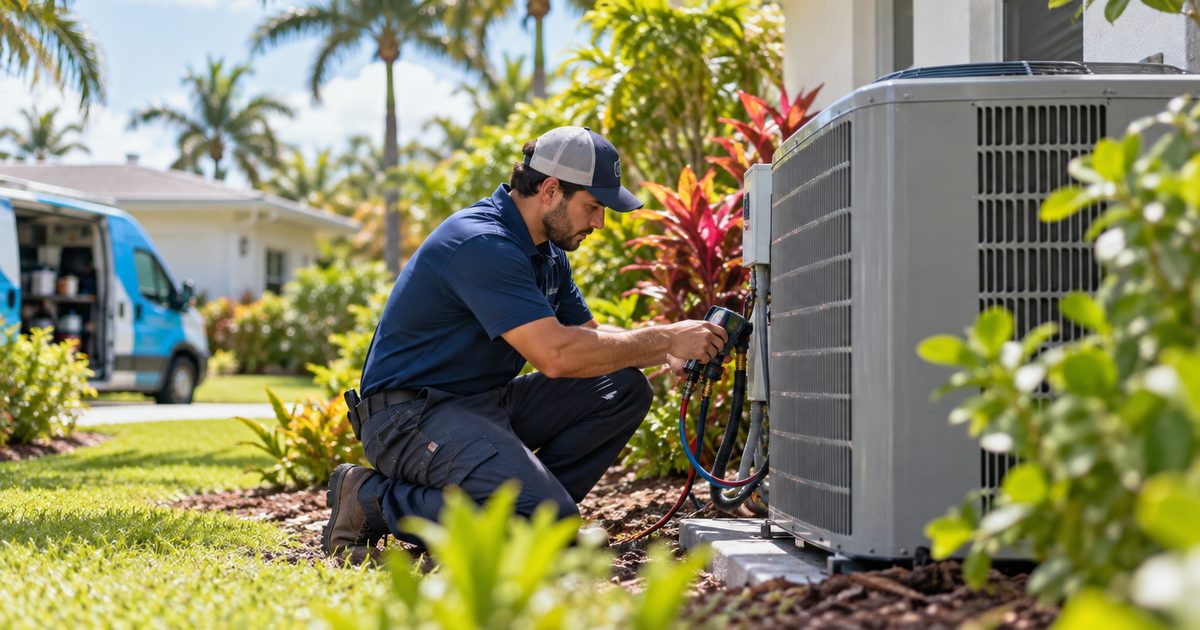
Florida home services demand doesn’t stop in winter the way it does in much of the country. Heat, humidity, rain and storms keep cooling, moisture, pest and pool work coming in for most of the year. What changes is which services lead. In Mark Riley’s paid search work in Florida, competition stayed fairly steady through the year. The bigger shifts came from new competitors entering the market, or from old ones returning to Google Ads. At Riley Summers, we keep Florida campaigns running all year, shift the emphasis between services as conditions change, and watch for competitors who change the auction.
On this page
- Why Florida Doesn’t Follow the National Calendar
- Florida vs. a Typical National Market
- The Year-Round Framework
- The Trades It Affects Most
- What It Means for the Business
- Related Resources
Why Florida Doesn’t Follow the National Calendar
Most national marketing plans assume two peaks: cooling in summer, heating in winter, and quieter months in between. Florida mostly has one long warm season, with several kinds of demand overlapping inside it.
- Heat. The National Weather Service calls heat a chronic hazard during South Florida’s long summer. Cooling work starts early and runs late.
- Rain and humidity. The South Florida wet season runs from May 15 to October 15. On the Gulf Coast, the National Weather Service Tampa Bay office defines the rainy season as May 15 to October 15 for Southwest Florida and May 25 to October 10 for the rest of West Central Florida. That keeps moisture, mold, roofing and drainage work coming in.
- Storms. Atlantic hurricane season runs from June 1 to November 30, overlapping almost the entire rainy season.
- Winter. The cooler, drier months bring seasonal residents back, along with work on homes that sat empty all summer. That’s covered in our Seasonal Residents guide.
For a Florida business, that means there’s rarely a month when switching the marketing off makes sense. The real question is which services to put in front of customers, and when.
How Riley Summers helps: We plan Florida campaigns around this overlap, not a national calendar, so the budget stays behind the work that’s actually coming in each month.
Florida vs. a Typical National Market
Here’s how demand in Florida compares with a typical national market.
| Typical national market | Florida | |
|---|---|---|
| Is something wrong? | Often, with demand driven by breakdowns in peak heat or cold | Often, and in most months. Heat, humidity and storms keep breakdowns and damage coming in |
| Decision window | Short in peak season, longer in the shoulder months | Short for most of the year. Humidity makes a broken AC hard to live with, and lets mold, mildew and pests take hold quickly if a problem is left |
| Main marketing challenge | Ramping up for two peaks without wasting spend in the quiet months | Deciding which services lead each month, with no true quiet season to plan around |
| How they usually book | Mostly by phone when something’s wrong; contact forms and estimate requests for planned work | The same, but seasonal homes are often booked by an out-of-state owner or a property manager |
| Key metric | Leads and cost per lead through each peak | Leads per campaign and in total, every month, since the mix between services keeps shifting |
The Year-Round Framework
We call our approach to Florida demand the Year-Round Framework. It replaces the national habit of ramping up for two peaks with four steps that keep a campaign working every month.
- Keep the Core Running
- Shift the Emphasis
- Follow the Auction
- Hold Spend Steady
1. Keep the Core Running
A business’s core services stay advertised all year. In Florida, pausing them in a month that looks slow usually hands those customers to competitors who kept going. Campaigns for occasional services may be paused where demand drops off, but the core work stays on.
2. Shift the Emphasis
As conditions change, we move the weight of the budget between services: toward cooling as summer builds, toward moisture, mold and roofing work through the rainy season, and toward the work seasonal residents bring back in the cooler months. The total spend stays steady. What changes is which services it goes to.
3. Follow the Auction
We don’t raise spend because the calendar says it’s time. We raise it when the market calls for it, signaled by a client losing impression share or top-of-page position. In Florida, that’s more often caused by a competitor than by the season. In Mark Riley’s paid search work, a competitor’s sudden push usually followed a switch to a new agency that wanted to do things its own way. The cost showed up in lead quality: our ads were less prominent on the best searches. That left two choices: add new budget, or move it from another campaign. Most well-funded clients added budget so their other campaigns weren’t sacrificed, unless his team could clearly show that moving it wouldn’t have a significant impact. At Riley Summers, we watch the competition every month, bring the owner both options when it changes, and the owner decides.
4. Hold Spend Steady
We aim to keep monthly spend consistent. When the market calls for more, we contact the owner ahead of time, explain the opportunity being left on the table, and the owner decides. Our flat management fee doesn’t rise with spend, so a recommendation to spend more is never about our fee.
How Riley Summers helps: The budget stays behind the services customers are actually searching for each month, and the owner knows about any change in spend before it happens.
Is your budget following Florida’s year, or a national calendar?
Riley Summers will review your paid search campaigns and show you where the budget is working and where it’s being wasted.
The Trades It Affects Most
Florida’s long season affects some trades more than others. These are the ones where we expect it to change the marketing most.
- HVAC. Cooling demand runs most of the year, and humidity control sits alongside it. Repair campaigns stay on all year, and replacement and maintenance get more weight in the milder months, when owners have room to plan.
- Pest control. Warm, humid conditions keep pests active for most of the year. Campaigns stay steady, with recurring service plans as the focus rather than seasonal pushes.
- Pool service. In South Florida, unless a pool has a heater, the water gets uncomfortably cool from around November, so swimming tails off. Maintenance doesn’t. Pools still need service once or twice a week, every week, whatever the weather. That makes pool marketing about winning recurring maintenance customers all year, not a spring opening rush.
- Lawn care. Grass keeps growing all year in Florida, just more slowly in the cooler months. Many lawns go from weekly mowing to every other week from around November into spring. The customer still needs the service, just less often, so lawn care marketing is built around keeping recurring customers all year rather than signing them up for a season.
- Pressure washing. Humidity keeps mold and mildew building up on roofs, driveways and walls all year, so the need never goes away. Demand also picks up before Thanksgiving, as many homeowners get their homes ready for the holidays. Campaigns stay on all year, with more weight in the weeks leading into the holidays.
- Water, mold and roofing. Rain and storms bring sharp spikes on top of a steady base. The spikes are covered in our Hurricane & Storm Marketing guides, and the steady base is covered here.
How Riley Summers helps: We set each client’s campaigns around the way demand actually moves in their trade in Florida, not a calendar borrowed from another market.
What It Means for the Business
For a Florida home services business, planning around year-round demand changes three things.
- Steadier lead flow. Core campaigns don’t go dark in a month that only looks slow, so the phone keeps ringing with the work the business wants, and competitors don’t pick up the customers it walked away from.
- No wasted ramp-ups. Spend rises when the market calls for it, not on a date borrowed from a national plan. The budget isn’t spent preparing for a peak that may arrive later, or differently, in Florida.
- A budget planned for 12 months. Wherever possible, we plan the budget for the whole year, with consistent monthly spend and the emphasis moving between services. The owner knows what’s being spent and why, and hears from us before anything changes.
How Riley Summers helps: We give Florida owners a marketing plan built for how their market actually behaves, so every month’s budget is working for the business, not waiting for a season.
Related Resources

About The Author
Mark Riley is a marketing executive and the founder of Riley Summers Marketing Group, where he leads customer acquisition strategy for home services businesses across paid search, Google Local Services Ads, local SEO and paid social media. He rose to VP of Digital at a national legal-marketing agency, where the digital programs he led generated a significant share of its revenue. Over a 15+ year career, he has managed more than $70 million in digital advertising spend, much of it in one of the most expensive and competitive advertising categories in North America. He measures marketing by what it costs to win a booked job, not by traffic or lead volume.