
Recurring Service Marketing for Home Services Businesses
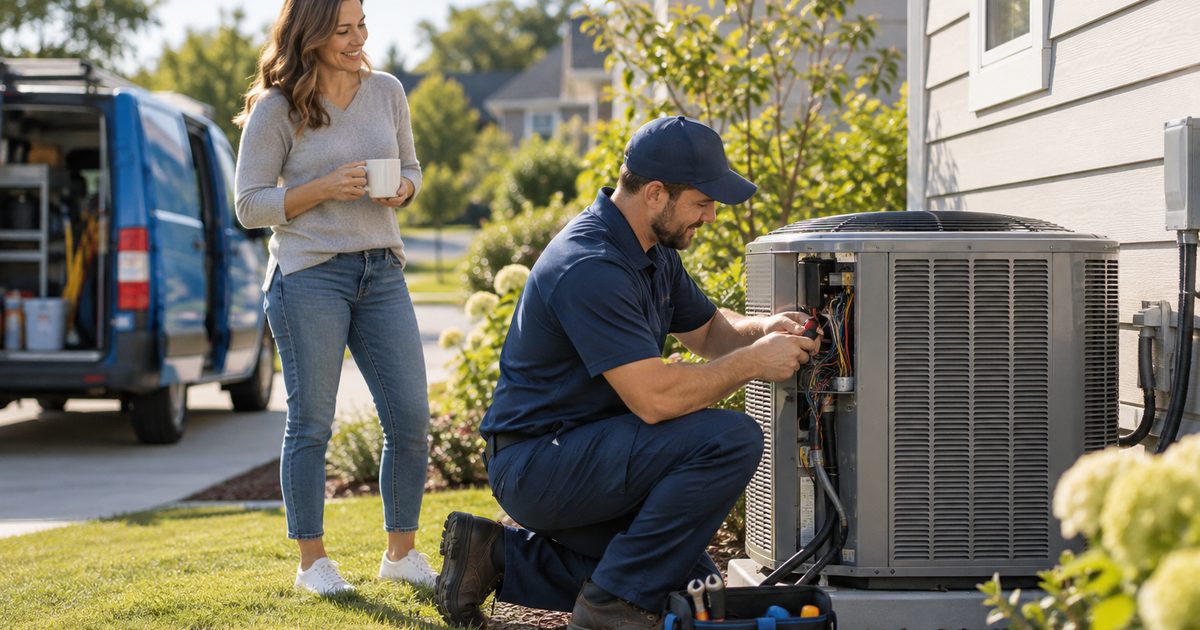
Recurring service marketing is marketing for services a homeowner hands over to a provider on an ongoing schedule, such as pest control, pool service, lawn care or house cleaning, where each visit happens without a fresh purchasing decision. The challenge is to be chosen as the continuing provider, not just hired for a single visit, and to win each customer at an acquisition cost the relationship can justify.
These quotes show three different purchasing decisions. Recurring service is the one where the homeowner hands the job over:
- Routine service“Nothing’s wrong, but it’s due.”
- Maintenance and membership“We want to protect what we’ve got.”
- Recurring service“We want someone to just take care of it.”
Recurring service is won by the business homeowners choose as their continuing provider, and it’s profitable only when each customer is acquired at a cost their relationship with the business can justify.
On this page
- What Recurring Service Demand Is and Isn’t
- How Homeowners Decide on Recurring Service
- The Long-Term Customer Framework
- Recurring Service Compared With Other Demand Types
- What a Recurring Customer Is Worth Acquiring
- Where Recurring Customers Are Worth Acquiring
- First-Service Offers
- Recurring Versus One-Time Service Campaigns
- Channels for Recurring Service
- Measuring Recurring Service Marketing
- Recurring Service Marketing Mistakes We See
- Recurring Service Across Trades
- Related Resources
What Recurring Service Demand Is and Isn’t
We classify recurring service by how the homeowner buys. Recurring service usually rests on an ongoing agreement between the homeowner and the provider. Most are written service agreements, though some are verbal. Under that agreement, the service continues without the homeowner making a fresh purchasing decision before each visit.
Each demand type reflects a different purchasing decision:
- Routine service: “Book this service.” The homeowner decides each time a visit is due.
- Maintenance and membership: “Protect this investment.” The homeowner buys a plan to keep something they own in good condition.
- Recurring service: “Take care of this for us.” The homeowner hands an ongoing need to a provider.
- Seasonal service isn’t a separate purchasing decision. It’s a timing pattern that can apply to any of the three, such as a lawn program that starts in spring or a pool opening.
The same service can fall on either side of the line, depending on why the homeowner buys it:
- Quarterly pest control bought to keep pests out of the home is recurring service.
- A termite protection plan bought to protect the structure of the house is maintenance.
- A one-time lawn cleanup is an individual service. It becomes recurring when the homeowner signs up for ongoing lawn care.
That last case matters for marketing. Many recurring customers start with a single service, so the individual job can be the first step toward an ongoing relationship.
This page covers acquiring recurring customers. For the other purchasing decisions, see Routine Service Marketing, Maintenance & Membership Marketing and Seasonal Service Marketing. For how recurring revenue and route-based economics shape a business, as distinct from how its customers are acquired, see Recurring Service Businesses and Route-Based Service Businesses.
How Homeowners Decide on Recurring Service
Few homeowners set out looking for a service agreement. Something prompts the decision: moving into a new home, the start of a season, a pest sighting, running out of time to do it themselves, or growing tired of their current provider.
- Trigger. Something makes the ongoing need hard to ignore.
- Search. The homeowner looks for providers and what ongoing service involves.
- Compare. They weigh a few providers on reviews, what’s included and how easy it is to start.
- First service. Some sign up for ongoing service straight away. Others start with a single visit.
- Ongoing agreement. The homeowner commits to the continuing service.
Three types of prospects
Recurring customers come from three different starting points. Each needs different messaging and landing page content.
- First-time buyers have never had an ongoing provider for this service. They need to understand what ongoing service involves, what’s included and how to start. Marketing for them explains the service before it sells it.
- Switchers already have a provider and are unhappy with it. They know what the service is; what they’re weighing is whether another provider will be more reliable. Reviews, clear messaging about what the business does differently, and an easy way to switch carry the most weight.
- Occasional buyers have bought the service one visit at a time, from this business or another, and could benefit from an ongoing arrangement. Where the client’s data allows, customer-list audiences and remarketing let us reach the business’s own past one-time customers with the case for ongoing service.
Why homeowners delay
| Reason | What the homeowner is thinking | What marketing can do |
|---|---|---|
| Commitment | “We don’t want to be locked in.” | Landing pages and FAQs that explain the agreement plainly |
| Cost over time | “What will this cost us over a year?” | Clear information on what’s included, presented the way the business chooses to price |
| Doing it themselves | “We can probably handle it ourselves.” | Messaging about the time and effort the service takes off their hands |
| Switching hassle | “Changing providers sounds like a hassle.” | Showing how simple it is to start |
| Trust | “Who’s going to be at our house every week?” | Reviews and proof of who the business is |
| Timing | “We’ll start when the season does.” | Campaigns ready before the season starts, and remarketing to keep the business in view |
The Long-Term Customer Framework
1. Find the Right Households
Not every inquiry is a good recurring customer. We aim acquisition at the areas, homes and service needs that fit the business’s recurring model, including the neighborhoods its routes already serve. Where the client’s data allows, we use what the business knows about its best existing customers to shape who we target.
2. Sell the Relationship
A campaign built around a cheap one-time visit attracts homeowners looking for a cheap one-time visit. Our ads and messaging make the case for ongoing service: what the homeowner no longer has to think about, what’s included, and why this business is worth staying with.
3. Make It Easy to Start
Homeowners who are ready to sign up shouldn’t have to work to do it. That means landing pages built for recurring service rather than one-time jobs, clear information on what’s included and how the agreement works, honest first-service offers, and, where the client’s systems allow, conversion tracking that records whether an inquiry became a recurring customer.
4. Bring Back the Undecided
Some homeowners request information and don’t commit, and others have bought a single service without signing up. Remarketing keeps the business in view for them. Where the client’s data allows, customer-list audiences let us reach the business’s past one-time customers with the case for ongoing service.
5. Count Customers, Not Leads
A lead is only an inquiry. We measure campaigns against confirmed recurring customers and, where the client’s CRM allows, how long customers from each source stay and what they’re worth. That feeds back into who we target and where budget goes. Keeping customers once they’ve signed up is the business’s service work. Our part is making sure the marketing brings in customers likely to stay.
Recurring Service Compared With Other Demand Types
| Recurring Service | Routine Service | Maintenance & Membership | Seasonal Service | |
|---|---|---|---|---|
| Is something wrong? | No. The homeowner wants an ongoing need taken care of | No | No. The homeowner wants to prevent problems | Usually not. The season creates the need |
| Decision window | Days to weeks, then ongoing | Days to weeks, or put off indefinitely | Days to weeks | Set by the season |
| Main marketing challenge | Winning ongoing service relationships with customers likely to stay | Getting them to act | Converting service customers into plan members | Capturing demand within the purchasing window |
| How they usually book | Call, form, or sign-up for ongoing service | Online or by phone | Sign-up, often alongside a service visit | Call, form, or online booking before or during the season |
| Key metric | Cost per acquired recurring customer | Cost per booked job | Cost per new plan member | Cost per booked job in season |
What a Recurring Customer Is Worth Acquiring
With a one-time job, the value of a new customer is approximately the value of that job. With recurring service, it’s the value of the relationship. That changes what the business can afford to spend to win each customer, and it changes how campaigns should be judged.
A campaign that looks expensive on the first visit can potentially be the most profitable one the business runs if the customers it brings in stay for years. A campaign that looks cheap can lose money if its customers cancel after a visit or two.
Two cautions keep that calculation honest:
- Revenue isn’t profit. What a customer is worth to the business depends on the margin on the service, not just what they pay.
- Expected value isn’t realized value. A new customer may stay for five years, even though they haven’t yet. Acquisition spend should rest on how long the business’s customers have actually stayed, not how long the business hopes this one will.
Where the client’s records allow, we base acquisition targets on the business’s own history: how long its recurring customers stay, what they spend and, where the business shares it, the margin on the service. That sets a realistic ceiling on what a new customer is worth paying for, and it tells us which campaigns deserve more budget.
How we help: Without a clear picture of what a recurring customer is worth, businesses tend to either overspend on customers who leave or underspend on campaigns that bring in customers who stay. We set acquisition targets from the business’s own customer history, where its records allow, so spend follows the customers who are actually worth winning.
Where Recurring Customers Are Worth Acquiring
For recurring service, the location of the customer’s home can be more important than it is for a one-time job. A customer who fits into an existing route is usually worth more to the business than one who sits well outside it, even if both pay the same. Broad geographic targeting treats them as equal.
Our team works to shape campaign geographic targeting around where the business wants to add customers. That means concentrating budget and making sure ads are highly visible in the areas it already serves well and wants to fill in, and keeping spend away from areas it doesn’t want to serve regularly. Where the client’s records allow, we also compare acquisition cost and how long customers stay by area, so targeting reflects where customers are actually worth winning.
How recurring revenue and route economics shape the business itself is covered in Route-Based Service Businesses. This section covers only how they shape advertising.
How we help: Campaigns that target a whole metro area can fill a schedule with customers the business can’t serve profitably. We align geographic targeting with the areas the business wants to grow in, so new recurring customers fit the way it runs its routes.
First-Service Offers
An introductory offer can bring recurring customers in, or it can bring in homeowners who take the discount and never book again. The difference is usually in how the offer is built and presented.
An offer tied to starting ongoing service, such as a reduced first visit when the homeowner signs up for the regular schedule, attracts people already thinking about an ongoing relationship. A deep discount on a single visit, with nothing that points toward what comes next, tends to attract bargain hunters. The first can build a customer base; the second can fill the schedule with one-time jobs that may not cover their cost.
Timing matters too. Many recurring services have a season when homeowners start thinking about them, such as pool service ahead of swim season, lawn care in spring or pest control before summer. An offer that runs ahead of that season, such as “Lock in your weekly pool service rate before swim season,” can win customers before demand peaks and before competition for those searches increases. The same honesty applies: if the offer promises a locked-in rate, the rate has to actually be locked in.
The business decides what it offers and at what price. Our part is presenting the offer clearly in ads and on landing pages, including what’s included and what the homeowner is agreeing to, and measuring which offers produce customers who stay. Where the client’s CRM allows, we compare how many first-service customers from each offer go on to become recurring customers, so the offers that bring in long-term customers get the budget.
Offers also have to be honest. An offer presented as ending soon when it isn’t, or one whose terms only become clear after sign-up, can win a first visit and lose the customer’s trust before the relationship starts.
How we help: A cheap first visit looks like a strong campaign until you count how many of those homeowners never book again. We measure offers by the recurring customers they produce, where the client’s systems allow, so budget goes to the offers that start real relationships.
Recurring Versus One-Time Service Campaigns
Many businesses that sell recurring service also sell one-time jobs, and homeowners search for both. Someone searching for weekly pool service or a lawn care plan is looking for an ongoing provider. Someone searching for a one-time pest treatment or a single lawn cleanup wants a job done. We call the first recurring intent and the second one-time intent: a homeowner who wants a provider on an ongoing schedule versus one who wants a single job done. When both kinds of search run through the same campaign, the budget, the messaging and the reporting all blur together.
We separate recurring and one-time intent, in separate campaigns where budget allows or at least in separate ad groups. That shapes five things:
- Search intent. Recurring campaigns are built around searches for ongoing service. We review search terms regularly and use negative keywords to keep one-time searches out of them, and the reverse.
- Messaging. Recurring ads make the case for the relationship. One-time ads focus on getting the job done.
- Landing pages. Recurring landing pages explain what ongoing service includes and how the agreement works. One-time pages focus on booking the visit.
- Conversion goals. A recurring sign-up and a one-time booking are tracked as different results, so campaigns are judged by the outcome they’re meant to produce.
- Budget. Because a recurring customer is usually worth more than a one-time job, recurring campaigns can justify a higher acquisition cost, and separating them makes that visible.
One-time customers still matter. Some become recurring customers later, which is why the Long-Term Customer Framework includes bringing back the undecided. Where the client’s data allows, customer-list audiences and remarketing let us reach past one-time customers with the case for ongoing service.
How we help: When recurring and one-time searches share a campaign, a cheap one-time booking can look as good as a new long-term customer. We separate recurring and one-time intent, in separate campaigns where budget allows or at least in separate ad groups, so each is measured against the result that matters.
Channels for Recurring Service
No channel works equally well for every recurring service or every prospect. Depending on the services a client engages us for, these are the roles each channel can play.
- Google Search Ads (pay-per-click). Search campaigns capture homeowners actively looking for an ongoing provider. We keep recurring and one-time intent separate, in separate campaigns where budget allows or at least in separate ad groups.
- Local Services Ads (pay-per-lead). LSAs can capture recurring service inquiries where Google offers the service category and the business is eligible. We check the fit before recommending them.
- Google Business Profile and local SEO (free and organic). Homeowners comparing providers check the business’s profile, and local search visibility helps the business get found by homeowners in its service areas.
- Service content on the business’s website (organic; no cost per click). Content explaining what ongoing service includes helps first-time buyers understand it before they choose a provider.
- Reviews (free to earn). For a provider who will be at the home every week or month, volume, recency and average rating all carry weight.
- Paid social (paid, per impression or click). We can use it to introduce ongoing service to suitable homeowners in the business’s service areas before they start searching.
- Remarketing (paid). This keeps the business in view for homeowners who looked but didn’t sign up, within each platform’s rules and applicable consent requirements.
Matching channels to prospect intent
| Prospect | What they need | Channels that fit |
|---|---|---|
| First-time buyers | To understand what ongoing service involves | Website service content, search ads, paid social |
| Switchers | Confidence that this provider will be more reliable | Search ads, reviews, Google Business Profile |
| Occasional buyers | A reason to move from one visit to an ongoing arrangement | Customer-list audiences and remarketing, where the client’s data allows |
Are your campaigns producing recurring customers or one-time jobs?
We review how a business’s paid search is set up for recurring service demand. That includes whether recurring searches are separated from one-time searches, whether geographic targeting matches the areas where the business wants to add customers, whether campaigns are judged against new recurring customers rather than leads, and where budget may be going to inquiries that never become ongoing service.
Measuring Recurring Service Marketing
A lead is an inquiry, and a one-time booking is a single job. Neither tells you whether a campaign is building the business’s recurring customer base. We measure recurring service campaigns by the customers they produce and, where the client’s CRM allows, how long those customers stay.
| Metric | What it answers | Notes |
|---|---|---|
| Cost per lead | What does an inquiry cost? | An early signal only; it says nothing about who stays |
| Lead-to-recurring-customer rate | What share of inquiries become recurring customers? | Shows whether campaigns attract the right prospects |
| Cost per acquired recurring customer | What does it cost to win one confirmed recurring customer? | The core acquisition measure |
| First-service-to-recurring rate | What share of first-service customers sign up for ongoing service? | For businesses that start customers with an introductory visit |
| Retention by acquisition source | Which sources produce customers who stay longer? | Where the client’s CRM allows |
| Acquisition cost versus customer contribution | Does what a customer is worth justify what it cost to win them? | Where the business shares its margin data |
Reading the results
- Many leads, few recurring customers. This usually points to mixed intent in campaigns, or offers that attract one-time buyers.
- Plenty of new customers who leave quickly. This can point to offers or targeting that bring in poor-fit customers. It can also point past the marketing, to the service experience itself. We flag it either way, because more leads won’t fix it.
- Strong retention from one source. That source deserves a closer look for more budget, even if its cost per lead looks high.
Worked example
Illustrative figures only, not a benchmark.
Two campaigns each spend $6,000. Both sell the same service at $100 a month.
| Campaign A | Campaign B | |
|---|---|---|
| Leads | 120 | 60 |
| Cost per lead | $50 | $100 |
| New recurring customers | 12 | 10 |
| Cost per recurring customer | $500 | $600 |
| Average months a customer stays | 6 | 24 |
| Revenue per customer | $600 | $2,400 |
| Revenue from customers won | $7,200 | $24,000 |
Campaign A wins on cost per lead and on cost per recurring customer. Campaign B’s customers stay four times as long, and they produce more than three times the revenue for the same spend. These figures are revenue before the cost of providing the service, which is why we use the business’s own margin, where it shares it, before drawing conclusions.
Recurring Service Marketing Mistakes We See
These are the mistakes we look for when we review marketing for recurring service.
- Optimizing for cheap leads instead of recurring customers. Campaigns are judged by cost per lead, so the cheapest inquiries win budget even if few of them become ongoing customers. What we do instead: judge campaigns by cost per acquired recurring customer and, where the client’s CRM allows, how long those customers stay.
- Advertising one-time and recurring service as the same thing. Ongoing-service searches and one-time searches share the same ads and landing pages, so homeowners looking for a long-term provider get the same message as those who want a single visit. What we do instead: separate recurring and one-time intent, in separate campaigns where budget allows or at least in separate ad groups, with messaging and landing pages built for recurring service.
- Using introductory discounts that attract bargain hunters. A deep discount on a single visit brings in homeowners with little intention of continuing. What we do instead: present offers tied to starting ongoing service, and measure which offers produce customers who stay.
- Competing on price instead of the value of an ongoing relationship. Campaigns lead with low monthly prices, discounts or generic claims such as “reliable service,” without giving homeowners a real reason to choose one provider over another. Price becomes the main point of comparison, which can attract customers who switch as soon as a competitor offers a better deal. What we do instead: build ads and landing pages around what genuinely sets the business apart, supported by customer reviews, its experience and a clear picture of what ongoing service includes. That gives homeowners reasons to choose the business beyond its introductory price.
- Targeting too broad an area. Campaigns cover a whole metro area, winning customers the business can’t serve profitably on its routes. What we do instead: concentrate targeting in the areas where the business wants to add customers, and compare results by area where the client’s records allow.
- Losing the link between marketing and recurring customers. The CRM records a lead but not whether it became a recurring customer, or which source it came from. What we do instead: keep each customer’s original source attached and, where the client’s systems allow, feed confirmed recurring customers back into the ad platforms so campaigns optimize toward customers, not leads.
Recurring Service Across Trades
| Trade | Ongoing service | Starting directly with recurring service | Starting with a single service |
|---|---|---|---|
| Pest control | Quarterly or regular pest control | A homeowner searches for ongoing pest control after moving in | A one-time treatment after a pest sighting |
| Lawn care | Regular mowing, often more frequent during the growing season, or a lawn treatment program | A homeowner looks for a lawn care provider as the growing season starts | A one-time yard cleanup |
| Pool service | Weekly pool cleaning | A new pool owner looks for weekly service | A one-time cleanup of a green pool |
| House cleaning | Weekly or biweekly cleaning | A homeowner looks for a regular cleaner | A one-time deep clean or move-out clean |
Across these trades, recurring customers arrive by one of two pathways, and every trade sees both:
- Direct recurring acquisition. The homeowner is already looking for an ongoing provider. Marketing here makes the case for the relationship: reviews, a clear picture of what ongoing service includes, and an easy way to start.
- Individual-service conversion. The homeowner wants a single job done, but could become a recurring customer. Marketing here captures the one-time demand efficiently, presents the ongoing option on the landing page, and, where the client’s data allows, uses remarketing and customer-list audiences to bring those customers back with the case for ongoing service.
Related Resources

About The Author
Mark Riley is a marketing executive and the founder of Riley Summers Marketing Group, where he leads customer acquisition strategy for home-services businesses across paid search, Google Local Services Ads, local SEO, and paid social media. He helped build a North American legal-marketing agency, where the digital programs he led generated a significant share of its revenue, and was part of the team that met with and evaluated prospective private-equity buyers during its sale. Over a 15+ year career, he has managed more than $70 million in digital advertising spend, much of it in one of the most expensive and competitive advertising verticals worldwide. He measures marketing by what it costs to win a booked job, not by traffic or lead volume.