
Emergency Service Marketing For Home Services Businesses
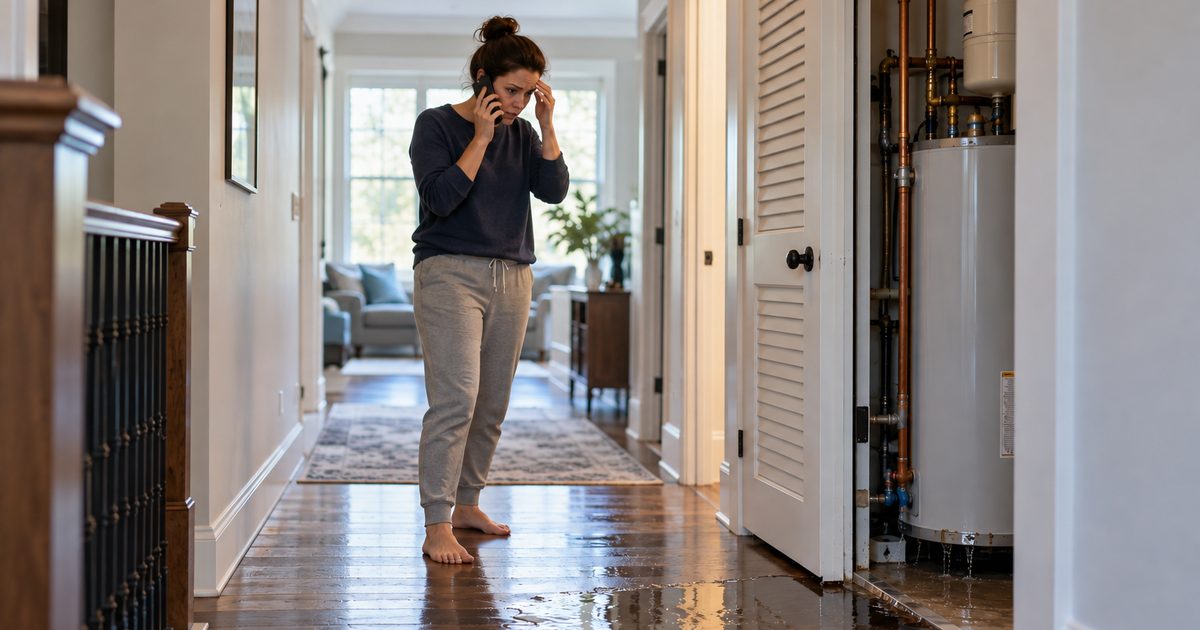
Emergency service marketing is the practice of capturing home-service customers at the moment an urgent problem strikes (for example, a burst pipe, a broken AC, a failed furnace, or a dead panel) and turning that demand into booked jobs. Because these buyers commonly call the first available, trustworthy provider they find, results depend as much on visibility, availability, and call handling as on advertising itself.
Emergency service sits at one end of a spectrum of how soon customers need help:
- Emergency“I need someone now.”
- Urgent repair“I need someone soon.”
- Planned repair“I need to get this fixed, and I’m researching my options.”
On this page
- What Makes Emergency Demand Different
- The Emergency Demand Capture Framework
- How Emergency Demand Compares
- What Emergency Intent Means for Each Part of the Results Page
- The Operational Ceiling
- How to Measure Emergency Marketing: The ABCs
- Emergency Marketing Mistakes We See
- Emergency Service Marketing Across Trades
- Related Resources
What Makes Emergency Demand Different
Emergency demand doesn’t behave like the rest of home-services demand. The buyer isn’t researching, comparing, or planning. They have a problem that’s getting worse by the minute, and their only goal is to find someone who can fix it now. That changes almost every rule of how marketing works.
The decision happens on the search results page, so own as much of it as possible
Emergency buyers rarely click through to compare websites. They search on their phone and choose from what’s in front of them: Local Services Ads at the top, then paid search ads, the Map Pack, and organic results. Each placement is a separate chance to be chosen, so the strongest approach is to appear in as many of them as possible at once. A business that shows in the LSA unit, a call-focused ad with a strong value prop, the Map Pack, and the organic results takes up more of the screen, looks more established, and leaves less room for competitors. And because callers commonly work down the list until someone answers, visibility is only half the battle. The first provider to pick up usually wins the job.
Reviews do the selling in seconds
With no time to research, buyers lean on the fastest trust signals available: star rating, review count, and how recent the reviews are. A listing with strong, current reviews can win the call over a closer competitor. A thin or outdated profile can lose it before the phone ever rings.
Your listed hours can decide the call
Both Google Business Profiles and Local Services Ads show a business’s hours, and emergency searchers notice. A listing that appears closed at 9 p.m. is easy to skip, even if the company takes after-hours calls. For LSAs, hours are also a ranking signal. If a business offers emergency service, its hours on both the Business Profile and the LSA profile need to say so accurately. Otherwise it’s advertising availability it isn’t showing.
Availability comes first, and price usually follows
Price still matters, but it’s rarely the first question. Emergency callers want to know whether someone can come today. Businesses that lead with availability and a clear next step tend to convert better than those that lead with cost.
Demand arrives when most shops are least ready
Emergencies don’t keep business hours. Demand often spikes at night, on weekends and holidays, and during extreme weather, which is exactly when many shops have the thinnest coverage. That mismatch is where a large share of emergency revenue is won or lost.
How we help: Emergency searchers choose from what’s on their screen, often after hours, so every placement a business is missing, and every listing that shows it as closed, sends calls to a competitor. We make sure our clients are visible and shown as open when their customers are actually searching.
The Emergency Demand Capture Framework
Winning emergency work isn’t one tactic. It’s a chain, and the job goes to the business with no broken links. The framework breaks emergency demand capture into five stages, and each one depends on the stage before it.
1. Be Visible
Show up in as many placements as possible when the search happens: Local Services Ads, call-focused ads with a strong value proposition, the Map Pack, and organic results. For paid search, that means building campaigns around emergency intent, using call assets, and weighting budget toward the hours when emergency searches peak. For the Map Pack and organic results, it means accurate Business Profile categories and dedicated pages for the emergency services the business actually provides.
2. Be Available
Visibility only pays off if someone can take the call. Listed hours on the Business Profile and the LSA profile should match real coverage. When a client has no one in-house after hours, we usually recommend routing calls to an answering service or call center rather than pausing advertising, so the business never goes dark while emergency demand is at its peak. A nearshore team can work well and is often more cost-effective than US-based equivalents, as long as English is strong, because the caller’s confidence depends on the quality of that conversation. Whoever answers should be able to book the job or dispatch a technician, not just take a message. An emergency caller who hears “someone will call you back” moves on to the next listing.
3. Be Trusted
With no time to research, buyers rely on fast signals: star rating, review count, review recency, and verification badges such as Google Verified. We only put response-time claims in ads that the client can actually keep, because an emergency customer who waits longer than promised becomes a bad review.
4. Win on Response Time
Because callers work down the list, response time decides the job. That covers answer rate, rings before pickup, callbacks on missed calls, and how quickly messages and booking requests get a reply. Call routing shouldn’t lose the caller along the way. For Local Services Ads, response time does double duty: it wins the current call and it improves visibility for the next one.
The Three R’s of Local Services Ads
For emergency work, LSA placement comes down to three factors:
- Radius: how close the business is to the searcher.
- Reviews: rating, volume, and recency.
- Response time: how quickly the business answers calls and replies to messages.
Two of the three are within the business’s control every day. Radius is largely fixed. Reviews and response time are earned.
5. Measure What Matters
Emergency marketing should be judged by booked jobs, not lead volume. Track the full chain for each channel: calls received, calls answered, jobs booked, and revenue. Also track answer rate by hour of day. It shows exactly where after-hours demand is being lost. The ABCs of emergency measurement below show how.
How we help: A call that reaches voicemail, or a service that only takes messages, is paid-for demand handed to the next listing. We ghost call our clients’ businesses, calling the way a customer would, including after hours, so we know exactly what their callers experience and where leads are being lost.
Are emergency calls slipping through?
We’ll audit your Google Ads and Local Services Ads and show you where spend is going to hours, searches, and calls that never become booked emergency jobs.
How Emergency Demand Compares
Emergency demand is often confused with other kinds of home-service demand. Here’s how it differs from the three types it’s most often grouped with.
| Emergency | Urgent Repair | Routine Service | Replacement | |
|---|---|---|---|---|
| Decision window | Minutes to hours | Same day to a few days | Days to weeks | Weeks to months |
| Research depth | Almost none | Light | Moderate | Heavy, with multiple quotes |
| Where the decision happens | Search results page | Search results page, plus a quick review check | Website, reviews, offers | Website, in-home estimate, financing |
| Primary channels | LSAs, call-focused ads with a strong value prop, Map Pack | LSAs, search, Map Pack | Search, organic, past-customer email and SMS | Search, organic, paid social, remarketing |
| Price sensitivity | Low; availability comes first | Moderate | High; offers matter | High, but value and financing weigh heavily |
| Conversion action | Phone call | Call or booking request | Online booking or form | Estimate request |
| Key metric | Answer rate and cost per booked emergency job | Cost per booked job | Cost per booked job and repeat rate | Cost per sold job and close rate |
| Most common failure point | Unanswered calls and after-hours gaps | Slow scheduling | Weak offers and no retention follow-up | Slow or weak estimate follow-up |
What Emergency Intent Means for Each Part of the Results Page
An emergency search produces a crowded results page, and every section of it is a chance to be chosen. The layout varies by search, but it commonly runs top to bottom like this.
1. Local Services Ads
LSAs usually sit at the very top, and for emergency searches they’re often the first thing a searcher sees. Placement comes down to the Three R’s: radius, reviews, and response time. Hours on the LSA profile must reflect real coverage, and we review every lead and dispute the invalid ones.
2. Paid search ads
Next come the text ads. What wins here is a call-focused ad with a strong value proposition, such as availability today, fast arrival, or 24/7 service, backed by a call button and scheduled for hours when the phone will be answered.
Behind the scenes, a practical setup separates campaigns by match type. Match types tell Google how closely a customer’s search has to match the words you’re advertising on, ranging from searches that mean exactly the same thing to broader, loosely related ones. Keeping them in separate campaigns lets you put more budget behind searches that clearly signal an emergency and less behind looser searches that may not.
Within each campaign, emergency searches such as “emergency plumber” or “24 hour AC repair” get their own ad group, separate from general service terms. That allows custom ad copy written for the emergency situation, leading with availability, fast arrival, and 24/7 service. Where applicable, the ads also get callouts and images specific to that service. Callouts are short extra lines under the ad, such as “24/7 Dispatch” or “Licensed & Insured.” Images might show a technician on the job or a branded service truck. Emergency searchers see an ad built for their situation and land on a page that says the same thing, while general searchers still see ads built for them.
Bids can then be raised in increments on the keywords that matter most, and adjusted by time of day and day of week. That way, the account bids hardest when emergency calls are most likely and most valuable, such as evenings, weekends, or peak season, and eases off when they aren’t.
3. AI Overviews (sometimes)
For some emergency searches, Google shows an AI-generated summary. Placement here can’t be bought. It’s earned through clear, well-organized pages that answer the searcher’s question, supported by a consistent business presence across the web.
4. The Map Pack
The map results are driven by the Google Business Profile. The priorities are accurate categories, hours that reflect emergency availability (list “open 24 hours” only if it’s true), emergency services listed explicitly, and a steady flow of recent reviews.
5. Ads in Maps
Paid search campaigns can also place promoted listings inside Google Maps and the map results, by linking the Business Profile to the ad account. It’s one more spot on the page to hold, and it reaches people who go straight to the map.
6. Organic results
Organic listings add credibility when a searcher sees the same business in several places. Each emergency service the business genuinely offers deserves its own page that states availability plainly and puts the phone number front and center. We don’t clone the same page across dozens of towns, because thin location variations rarely earn visibility.
7. More paid search ads
Additional ads often appear at the bottom of the page and catch searchers who scrolled past everything else. It’s a smaller opportunity, but it’s one more position in the chain.
How we help: Each placement is a separate chance to be selected, and competitors fill whatever onscreen real estate a business leaves empty. We build our clients’ presence across the results page for their most valuable emergency searches, so they hold more of the page.
The Operational Ceiling: Where Marketing Stops and Operations Take Over
Marketing can put a business in front of emergency demand. It can’t answer the phone, send a truck, or fix the problem. Every emergency marketing program runs into a ceiling set by operations, and the most common reason emergency campaigns underperform isn’t the ads. It’s what happens after the phone rings.
Missed calls are paid-for losses
A missed emergency call is rarely a lost lead that can be recovered later. The caller simply moves on to the next listing. With paid channels, the business often still pays for that contact, so every unanswered call is advertising spend handed to a competitor. Tracking answer rate by hour of day usually shows exactly where the losses cluster, most often in evenings, early mornings, and weekends.
Coverage and capacity are different problems
Coverage is whether someone answers. Capacity is whether anyone can be sent. An answering service or call center solves coverage, but it can’t create technicians.
When the schedule fills up, there’s no single right answer, and the decision belongs to the owner. There are two main options, each with a real trade-off:
- Pull back spend on the services and hours the business can’t fulfill. This stops paying for calls that will have to be turned away, but it gives up visibility to competitors while the business is paused.
- Keep pushing and book further out. This holds visibility and keeps the pipeline full, but true emergency callers rarely wait. Many will move on, and some may leave frustrated. It tends to work better for urgent and routine work than for genuine emergencies.
The right choice depends on how long the backlog will last, how much of the demand is truly urgent, and how the business values holding its position against protecting its budget. A good marketing partner lays out both options with the numbers behind them and lets the owner decide.
The handoff has to be fast
Between the answered call and the arriving technician, every delay costs trust, and a customer left waiting often calls the next business on the list. We raise this with clients because it directly affects what their marketing returns.
Operations before budget
When emergency results disappoint, the instinct is to spend more. But if calls are being missed, or jobs can’t be dispatched, more budget only buys more waste. We check answer rate and dispatch capacity before recommending more budget.
How we help: Missed calls don’t show up in cost per lead, but they drain the budget all the same. We show clients where their paid calls are going unanswered, so budget goes to the hours they can actually take the work.
How to Measure Emergency Marketing: The ABCs
Cost per lead is a misleading number for emergency work. It counts calls that were missed, calls that couldn’t be dispatched, and calls that were never emergencies. The ABCs follow the call all the way through to the booked job.
A — Answer rate = answered calls ÷ total inbound calls
The first checkpoint. Track it by hour of day and day of week, not just in total, because a healthy daily average can hide a weak evening or weekend.
B — Booking rate = booked emergency jobs ÷ answered emergency calls
The second checkpoint. It shows how well answered calls become scheduled work, and it’s a measure of intake and availability.
C — Cost per booked emergency job = emergency marketing spend ÷ booked emergency jobs
The litmus test. Answer rate and booking rate explain why results are what they are, but cost per booked job is the number emergency marketing should ultimately be judged by, and it’s the number we hold ourselves accountable to. For a fully loaded view, include answering service or call center costs alongside ad spend.
A worked example
Illustrative figures only, not a benchmark.
A company spends $4,800 in a month on emergency-focused advertising and receives 120 emergency calls.
- It answers 90 of them, for an answer rate of 75%.
- It books 45 jobs, for a booking rate of 50%.
- Its cost per booked emergency job is $4,800 ÷ 45 = $106.67.
If the same company raised its answer rate to 90%, answering 108 calls, and kept its 50% booking rate, it would book 54 jobs. Its cost per booked job would fall to $88.89 without spending a dollar more on ads. That’s the operational ceiling from the previous section, expressed in numbers.
What you need to track it
These numbers depend on tracking that most businesses only partly have:
- Call tracking that attributes each call to its source.
- A way to tag calls as emergency or non-emergency, such as call dispositions or CRM fields.
- Job outcomes recorded in the CRM, so booked work can be tied back to the call that produced it.
Without that chain, the business is measuring activity rather than results.
How we help: Without tracking that connects calls to booked jobs, there’s no way to tell which spend is working. We set up call tracking connected to the client’s job records, so every budget decision is based on booked work, not activity.
Emergency Marketing Mistakes We See
These are the mistakes we most often find when we review a home-services business’s emergency marketing, and each one is something we set out to fix when we take on a new client.
Listing limited hours, or claiming 24/7 without the coverage behind it. Google favors businesses that are open at the time of search, so a profile showing “Closed” at night gives emergency visibility to competitors. The answer isn’t to fake 24/7 hours. It’s to put coverage in place, such as an answering service or call center that can book and dispatch, so that 24/7 is true.
Owning only one spot on the results page. Relying solely on LSAs, or only on organic results, leaves most of the page to competitors. Emergency buyers choose from what’s in front of them.
Running generic ads for emergency searches. An ad that doesn’t speak to urgency, with no availability, arrival time, or 24/7 message, loses to one that does.
Sending after-hours calls to voicemail, or to a service that only takes messages. Emergency callers don’t wait for callbacks. If whoever answers can’t book or dispatch, the call usually goes to the next listing.
Leading with price instead of availability. The emergency caller’s first question is “Can you come?”, so our ads answer that before anything else.
Letting reviews go stale. Rating and volume matter, but recency tells a stressed searcher the business is active and trusted now.
Judging performance by cost per lead. It hides missed calls and unfulfillable jobs. The ABCs, and cost per booked job above all, show what emergency marketing is really producing.
Adding budget before fixing answer rate. If calls are going unanswered, more spend only buys more missed calls.
Emergency Service Marketing Across Trades
The framework applies across home services, but each trade stresses a different link in the chain.
Plumbing: the burst pipe. Every minute means more water damage, so response time decides everything.
HVAC: the broken AC or the failed furnace. Demand rises and falls with the weather. Extreme heat or cold can multiply emergency calls overnight, which makes time-of-day and seasonal bid adjustments especially valuable. It also makes the capacity decision (pull back or keep pushing) a regular conversation rather than a rare one.
Electrical: the dead panel. Not every “no power” call is an electrician’s job. Some are utility outages. We write ad copy and landing pages that separate the two, so the client doesn’t pay for calls it can’t help with.
Garage doors: the car trapped inside. The ticket is smaller, and the buyer wants someone nearby today. Radius and response time dominate, so tight service areas and fast answering matter more than elaborate messaging.
Pool service: the leaking pool. Most pool leaks feel urgent rather than true emergencies. The water loss is steady, not catastrophic. But if the water level falls below the skimmer, the pump can run dry and damage the equipment, which turns an urgent repair into an emergency. That makes it a strategic choice: we work with pool clients to decide which leak situations to market as emergencies and which to treat as next-day work, and set their ads and listed hours to match. The line between the two is covered in Urgent Repair Marketing.
Water damage restoration: the flooded room. High stakes, high tickets, and often an insurance claim. Trust signals such as verification badges, reviews, and credentials carry extra weight, and 24/7 availability is the baseline expectation rather than a differentiator.
Roofing: the active leak. Emergency roofing demand is closely tied to severe weather. It’s covered in depth in Storm-Driven Service Marketing.
How we help: Where the emergency line sits in a trade changes which searches are worth paying for. We build each client’s campaigns, ads, and listed hours around that line, so they pay for the emergencies they want, not calls they can’t help with.
Related Resources

About The Author
Mark Riley is a marketing executive and the founder of Riley Summers Marketing Group, where he leads customer acquisition strategy for home-services businesses across paid search, Google Local Services Ads, local SEO, and paid social media. He helped build a North American legal-marketing agency, where the digital programs he led generated a significant share of its revenue, and was part of the team that met with and evaluated prospective private-equity buyers during its sale. Over a 15+ year career, he has managed more than $70 million in digital advertising spend, much of it in one of the most expensive and competitive advertising verticals worldwide. He measures marketing by what it costs to win a booked job, not by traffic or lead volume.