
Urgent Repair Marketing for Home Services Businesses
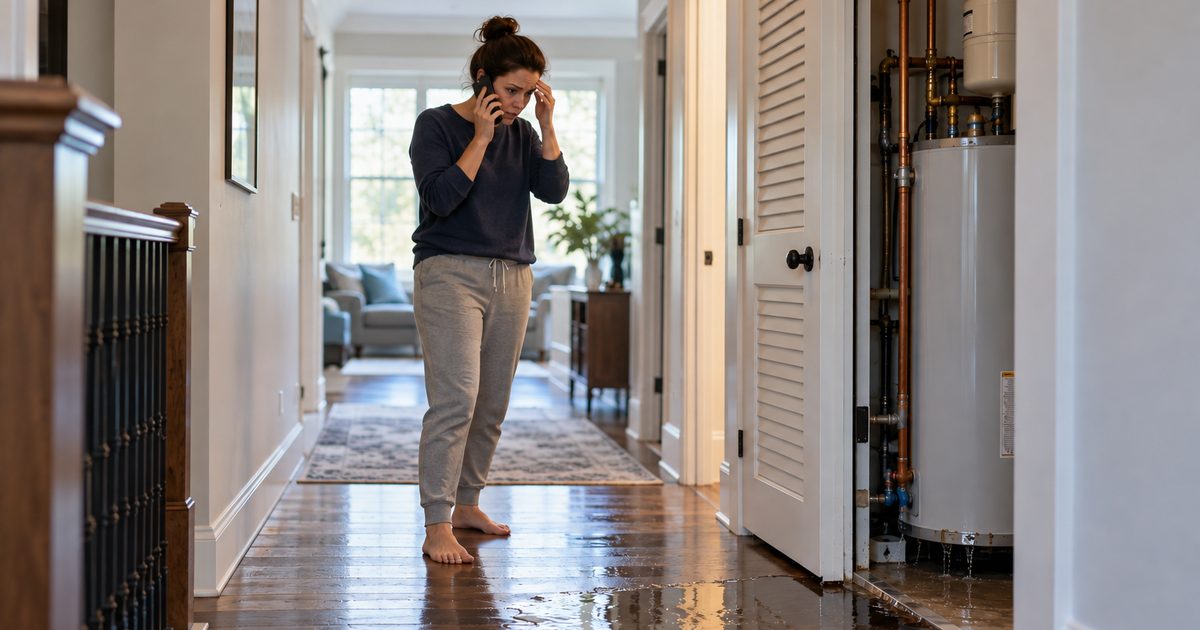
Urgent repair marketing is the practice of winning customers of home services businesses who need their problem fixed soon, but perhaps not immediately: an AC that isn’t as cold as it used to be, a toilet that doesn’t always flush, a water heater that isn’t producing enough hot water, or a garage door that won’t close properly. These customers have a short window to compare their options, so results depend on being found, showing quickly that you can help within their timeframe, and following up until the job is booked.
Urgent repair sits on a spectrum of how soon customers need help:
- Emergency“I need someone now.”
- Urgent repair“I need someone soon.”
- Planned repair“I need to get this fixed, and I’m researching my options.”
Many of these repairs eventually lead to a replacement decision. Each point on the spectrum calls for different messaging, channels, and follow-up, and marketing urgent repair as if it were an emergency, or as if customers had weeks to decide, wastes money on both sides.
On this page
- How Urgent Repair Customers Decide
- From Search to Completed Job
- When Urgency Changes
- The Repair-or-Replace Moment
- Where to Spend on Urgent Repair Demand
- Measuring Urgent Repair Marketing
- Urgent Repair Marketing Mistakes We See
- Urgent Repair Marketing Across Trades
- Related Resources
How Urgent Repair Customers Decide
Emergency marketing is about immediate capture: the first capable business to answer usually gets the job. Urgent repair works differently. The customer still wants the problem fixed soon, but has enough time to review and compare two or three options before choosing. Urgent repair marketing is about winning the click or the call in that short window.
The businesses that win it can answer yes to six questions.
Is your business visible when they search online?
Urgent repair customers search, scan the results, and build a short list. If your business doesn’t appear in the ads, the Map Pack, or the organic results for their problem, you’re not on that list. Showing up in more than one of those places makes you look established and puts you in front of the customer more than once.
Do you answer quickly enough?
A customer who calls, submits a form, or leaves a message with three companies often books with whichever one responds first. Missed calls and slow replies to form submissions hand the job to a competitor.
Are you available within their timeframe?
“Today or tomorrow” is usually good enough, but the customer needs to know it quickly. An ad, Business Profile, or landing page that says “same-day and next-day appointments available” removes the biggest uncertainty before they ever pick up the phone.
Can they trust you to do it right?
With a few minutes to look, customers read past the star rating. They look for recent reviews that mention the same problem, signs the business is established, and technicians who look professional. Warranties on parts and labor matter too, because many urgent repairs are signs of aging equipment, and the customer suspects this may not be the last one.
Is the price clear?
Price enters the conversation here in a way it rarely does in an emergency. Most customers want to avoid surprises more than they want the lowest price. A clear service-call or diagnostic fee, and financing for larger repairs, lower the risk of making the call.
Is it easy to book?
Some customers want to call. Others want to book online, send a text, or request an appointment after work. Every extra step, such as having to call just to find out whether anyone is available, is a chance for them to move on to the next option.
How we help: Urgent repair customers tend to build their shortlist quickly, and a business whose ads, Business Profile, and website leave these questions unanswered is easy to pass over. We build our clients’ marketing to answer them before the customer ever picks up the phone.
From Search to Completed Job
An urgent repair lead passes through seven stages before it becomes revenue. Each one is a point where the job can be won or quietly lost, and most shops lose more leads between stages than they realize.
- Found
- Qualified
- Bookable
- Booked
- Confirmed
- Completed
- Followed up
| Stage | What has to happen | Where shops lose it |
|---|---|---|
| Found | The business appears for the customer’s problem, and the click lands on a page about that problem. | Sending urgent searches to the homepage or a generic services page. |
| Qualified | Intake quickly confirms the problem, the address, and the timeframe. | Booking jobs outside the service area, or for work the shop doesn’t do. |
| Bookable | The customer can quickly tell whether you can help within their timeframe, by phone, online scheduling, text, or chat. | Making customers call just to find out whether anyone is available. |
| Booked | An appointment is set with a clear arrival window. | “We’ll call you back to schedule.” |
| Confirmed | The customer gets a confirmation text and email, a reminder, and notice when the technician is on the way. | No confirmation, so the customer keeps shopping and books elsewhere. |
| Completed | The job is done on schedule. | Reschedules, cancellations, and no-shows when capacity runs short. |
| Followed up | Unbooked leads get another contact, and completed jobs get a review request and next-step conversation. | Treating a lead that didn’t book on the first call as lost. |
Confirmation matters more than most shops think
An urgent repair customer who books but hears nothing further will often keep shopping, because the problem is still there and nothing tells them it’s handled. A confirmation text and email with the arrival window close that door.
Follow-up is where urgent repair differs most from emergency
An emergency caller who doesn’t reach you is gone. An urgent repair customer who didn’t book on the first contact may still be deciding a day later. A prompt follow-up call or text often wins jobs that competitors let go.
How we help: Most shops lose more leads between stages than they realize, and every lost lead is paid-for demand. Where the client’s systems allow, we track leads through each stage, so we can see where jobs are slipping away.
Is your ad budget reaching urgent repair customers?
We’ll audit your Google Ads and Local Services Ads and show you where spend is going to searches, hours, and leads that don’t turn into booked jobs.
When Urgency Changes
Urgent repair and emergency service often involve the same type of issue at different stages. A leaking pipe can move from a slow drip, to a leak that’s getting worse, to active flooding. The service the customer needs hasn’t changed. Their decision window has, and so has what it takes to win the job.
That matters for marketing in three places.
The search tells you which state the customer is in
“Water heater not getting hot enough” and “water heater leaking everywhere” may lead to the same technician, but they’re different customers. We separate searches by urgency, not just by service, so each gets ad copy written for its situation. Urgent repair ads lead with same-day and next-day availability, clear pricing, and reviews. Emergency ads lead with 24/7 service and fast arrival. Urgent repair ads can also carry a short line such as “Emergency? Call now,” so a customer whose problem is getting worse knows the business can still help. Emergency searches are covered in Emergency Service Marketing.
Intake should catch escalation
A customer who calls about an urgent problem may describe signs that it’s becoming an emergency: water spreading, a burning smell, a system that’s stopped entirely. Those calls need a faster path than the scheduling queue, and we raise it with clients because a missed escalation costs the job and, often, a review.
Your messaging should cover both, without blurring them
For clients who handle both urgent and emergency work, we make that clear in their messaging, with a separate, direct path for emergencies. Presenting every repair as an emergency trains customers to discount the claim, and presenting every emergency as a normal appointment loses the callers who can’t wait.
How we help: An urgent repair customer and an emergency caller need different messages, and blurring the two costs both. We separate urgent and emergency searches in our clients’ campaigns, with ads written for each, so every customer gets the right message from the first click.
The Repair-or-Replace Moment
A customer who searches “AC not as cold as it used to be” usually expects a repair. Sometimes that’s all it is. Sometimes the technician finds a system near the end of its life, and a $400 repair becomes a conversation about a $9,000 replacement. That possibility is one of the defining features of urgent repair demand, and it changes how the lead should be valued.
An urgent repair lead is worth more than its service call
If a repair campaign is judged only by the revenue from the repair itself, it will look more expensive than it is. Some of those calls lead to replacements now, and others lead to replacements a year or two later. When we set cost targets for repair campaigns, we account for the replacement revenue they produce, not just the ticket from the first visit.
“Not yet” isn’t “no”
Many customers choose the repair and put off the replacement. They’re now among the best replacement prospects a business has: they know the business, they trust the technician, and they know the system is aging. Through remarketing, and customer-list audiences where the client has given consent, we keep the business in front of them, timed around the seasons and any available rebates. That decision is covered in Replacement Service Marketing.
How we help: Repair campaigns that feed replacement sales are worth far more than their repair tickets suggest. Where the client’s CRM allows, we connect replacement sales back to the repair calls that started them, so those campaigns are valued, and funded, accordingly.
Where to Spend on Urgent Repair Demand
Because urgent repair customers take hours or days to decide rather than minutes, more channels have an opportunity to influence the choice than in an emergency. That doesn’t mean every channel deserves equal budget. Here’s how we weigh them.
Search and Local Services Ads do the heavy lifting
Most urgent repair jobs start with a search for the problem, so paid search and Local Services Ads, where the service category is available, usually carry the largest share of budget. The difference from emergency campaigns is in the message: availability within the customer’s timeframe, clear pricing, and reviews, rather than 24/7 speed alone.
Your Google Business Profile is where the short list gets made
Many urgent repair customers build their short list from the map results. A Google Business Profile with accurate services, current hours, and a steady flow of recent reviews that mention specific repairs earns a place on that list without paying per click.
Well-written pages on your company’s website
Customers search for symptoms, like “AC not as cold as it used to be,” as often as for services. Well-written pages on your company’s website that answer those problems clearly earn organic visibility, and they’re the kind of content AI search tools draw on when they answer the same question. It’s slower to build than paid search, but it compounds.
Remarketing earns its place here
Remarketing shows your ads to people who have already visited your website, as they browse other sites, watch YouTube, or search again. Unlike some industries that face restrictions on this kind of targeting, most home services businesses are permitted by Google to use it. A customer who visited your site and didn’t book may still be deciding tomorrow, and remarketing keeps your business in front of them during that window. It’s a channel that barely matters in emergencies and matters a lot here.
Past customers are the cheapest channel you have
Someone you’ve already served will often call a name they know before searching at all. With the client’s consent, we reach past customers directly through customer-list audiences in ad platforms, at almost no cost per job.
A fixed annual budget, adjusted by season
Urgent repair demand rises and falls with the seasons, as the first hot or cold week exposes systems that were already struggling. We work from a fixed annual budget and allocate it by season: more in the months when demand peaks, less in the months when it slows. Within those months, spend is paced to the schedule’s capacity, so it rises when there’s room to take the work and eases off when there isn’t. More on that in Capacity & Marketing.
How we help: When one platform supplies most of a business’s repair work, a change in that platform’s costs or rules changes the whole schedule. We build our clients’ demand across more than one channel, so no single platform controls their schedule.
Measuring Urgent Repair Marketing
Cost per lead is a weak measure for urgent repair. A cheap lead that never books, or books and cancels, isn’t worth much. Urgent repair marketing should be measured along the full path a lead travels: lead, contact, booked, completed, revenue.
| Metric | How it’s calculated | What it tells you |
|---|---|---|
| Speed to lead | Time from inquiry to first response | Whether you’re first to respond, which often decides who books the job |
| Contact rate | Leads reached ÷ total leads | How many leads you actually speak with |
| Booking rate | Booked jobs ÷ leads reached | How well conversations turn into appointments |
| Completion rate | Completed jobs ÷ booked jobs | How many bookings hold, rather than cancel after the customer kept shopping |
| Cost per completed job | Marketing spend ÷ completed jobs | What it really costs to produce a finished repair |
| Repair-to-replacement rate | Replacements sold from repair visits ÷ completed repairs | How much of the lead’s value shows up after the first visit |
Cost per completed job is the number we hold ourselves accountable to for urgent repair. It’s stricter than cost per booked job, because it counts only the work that actually happens.
That reflects how we run every account: our entire service is built around acquisition cost. Traffic and impressions are useful signals, but they aren’t the goal. The goal is to make the phone ring with the customers you want, at a cost that works for your business.
A worked example
Illustrative figures only, not a benchmark.
A company spends $5,000 in a month on urgent repair advertising and receives 100 leads.
- It reaches 80 of them, for a contact rate of 80%.
- It books 48 jobs, for a booking rate of 60%.
- It completes 42, for a completion rate of about 88%.
- Its cost per completed job is $5,000 ÷ 42 = $119.05.
At an average repair ticket of $450, those 42 jobs produce $18,900, or $3.78 in repair revenue for every marketing dollar. But suppose 3 of those visits lead to replacements at $9,000 each. That adds $27,000, bringing the total to $45,900, or $9.18 for every marketing dollar. Judged on repair revenue alone, the campaign looks good. Judged on everything it produced, it’s one of the best investments the business makes.
How we help: Cost per lead hides missed contacts, cancellations, and jobs that never happen. We report on cost per completed job, the number we hold ourselves accountable to, so clients see what their marketing actually produces.
Urgent Repair Marketing Mistakes We See
These are the mistakes we most often find when we review a home-services business’s urgent repair marketing, and each one is something we set out to fix when we take on a new client.
Treating every repair search as an emergency. Emergency messaging on an urgent repair search overpromises, costs more per click, and trains customers to discount the claim. Urgent customers want to know you can come soon, at a fair and clear price.
Using the same message for every type of demand. Emergency, urgent repair, routine service, and replacement customers are asking different questions. One generic ad or page answers none of them well.
Sending urgent traffic to generic service pages. A customer searching for a specific problem should land on a custom-made page about that problem, intentionally designed to encourage them to call or fill out and send a contact form, not the homepage or a list of every service the business offers.
Making customers call just to find out whether you’re available. If your ads, Google Business Profile, and website don’t say when you can come, customers will check a competitor that does.
Advertising when the schedule can’t take the work. Paying for leads you can’t serve for a week wastes budget and frustrates customers who needed help soon.
Letting booked jobs go unconfirmed. A customer who books but hears nothing further will often keep shopping. A confirmation text and email with the arrival window easily solves this, and it only needs to be set up once to work on every future booking.
Letting unbooked leads go. An urgent repair customer who didn’t book on the first contact may still be deciding. A prompt follow-up often wins the job.
Measuring leads instead of completed jobs. Lead counts hide missed contacts, cancellations, and jobs that never happen. Cost per completed job shows what the marketing actually produces.
Ignoring repair-to-replacement revenue. Judging repair campaigns only on repair tickets undervalues them and can lead to cutting the campaigns that feed replacement sales.
Urgent Repair Marketing Across Trades
The framework holds across home services. What changes from trade to trade is where the emergency line sits and how large the replacement opportunity is.
| Trade | Urgent repair example | When it becomes an emergency | Replacement opportunity |
|---|---|---|---|
| HVAC | AC not as cold as it used to be | No cooling in extreme heat, or a safety hazard | Full system |
| Plumbing | Toilet that doesn’t always flush; water heater not producing enough hot water | Sewage backup or active flooding | Water heater flush or new heating elements; sometimes a new water heater, fixtures, or sewer line |
| Electrical | Outlet or circuit that keeps tripping | Burning smell (even occasional), sparking, or exposed wiring | Outlets, breakers, or wiring; sometimes a panel upgrade |
| Garage doors | Door that won’t close properly | Door stuck open, leaving the home unsecured | Rollers or tracks; sometimes a new opener or door |
| Roofing | Small leak or a stain on the ceiling | Active water coming in during a storm | Tile or shingle replacement; possibly a new roof |
| Pool service | Pump running louder than usual, or a slow water loss | Water level below the skimmer, risking pump damage | Pump motor |
Two patterns stand out. In trades where the emergency line is close, like electrical, intake questions and a hot-transfer path matter most. In trades with large replacement tickets, like HVAC, a repair lead is worth far more than its service call, which justifies a higher acquisition cost for repair campaigns.
How we help: Where the emergency line sits in a trade decides which searches deserve an emergency message and which deserve an urgent repair one. We build each client’s campaigns around that line, so customers get the right message and the client pays for the right calls.
Related Resources

About The Author
Mark Riley is a marketing executive and the founder of Riley Summers Marketing Group, where he leads customer acquisition strategy for home-services businesses across paid search, Google Local Services Ads, local SEO, and paid social media. He helped build a North American legal-marketing agency, where the digital programs he led generated a significant share of its revenue, and was part of the team that met with and evaluated prospective private-equity buyers during its sale. Over a 15+ year career, he has managed more than $70 million in digital advertising spend, much of it in one of the most expensive and competitive advertising verticals worldwide. He measures marketing by what it costs to win a booked job, not by traffic or lead volume.