
Storm-Driven Service Marketing for Home Services Businesses
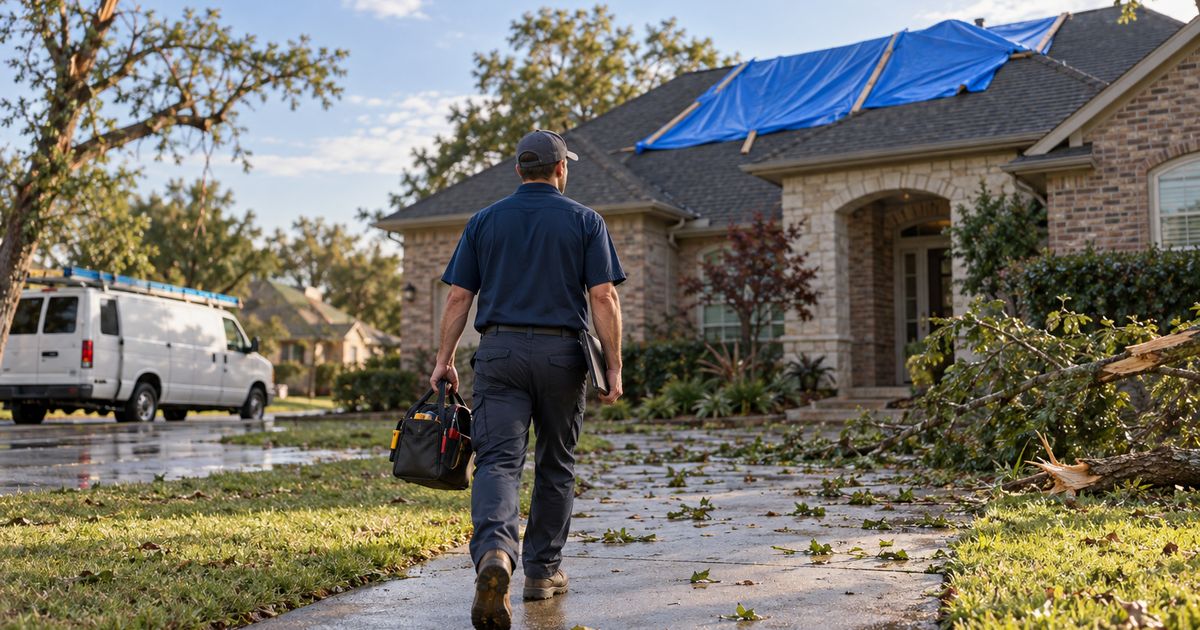
Storm-driven service marketing is marketing for demand created by approaching or recent severe weather, from storm preparation to emergency damage mitigation and permanent repairs. Unlike ordinary emergency demand, a storm can affect many properties at once, creating concentrated demand that can exceed local service capacity. The primary marketing challenge is reaching affected homeowners, earning their trust, managing demand responsibly and staying visible through the recovery.
These quotes show how urgent and timed demand differ. Storm-driven service is the one where a whole area needs help at once:
- Emergency“Water’s coming through the ceiling. Can someone come tonight?”
- Seasonal“Summer’s coming. We should get the AC checked.”
- Storm-driven“The storm took part of the roof. Can someone come out?”
Storm-driven marketing succeeds through preparation before severe weather, precise targeting after it and honest communication about availability. The goal is to capture the right work throughout the recovery without generating more immediate demand than the business can responsibly handle.
On this page
- What Storm-Driven Demand Is and Isn’t
- How Homeowners Decide Across the Storm Timeline
- The Storm Response & Recovery Framework
- Storm-Driven Service Compared With Other Demand Types
- Campaigns Ready Before the Storm
- Targeting the Affected Area
- Trust, Honesty and the Rules
- The Long Tail of Storm Repairs
- Channels Across the Storm Timeline
- Measuring Storm-Driven Marketing
- Storm-Driven Service Marketing Mistakes We See
- Storm-Driven Service Across Trades
- Related Resources
What Storm-Driven Demand Is and Isn’t
Storm-driven marketing is about what happens when a whole area needs help at once, and demand, capacity and homeowners’ needs keep changing through the recovery.
That sets the boundaries with the neighboring demand types:
- Emergency service: a single failure at a single home, on any day. A burst pipe on a calm Tuesday is emergency demand. Hundreds of damaged roofs after a storm are storm-driven demand.
- Seasonal service: storm season is predictable, but storms aren’t, in timing, path or severity. Seasonal marketing plans around a known window; storm marketing prepares for an event that may or may not arrive.
- Preparedness demand: a homeowner rushing to buy shutters or a generator because a specific storm is forecast is storm-driven demand, and this page covers it as a secondary focus. A homeowner who decides to install a generator after a long outage last year is making an elective upgrade, covered in High-Ticket Project Marketing.
Storm-driven demand also changes shape as recovery moves on. It starts with emergency mitigation, such as tarping, water extraction and tree removal, and moves to inspections and permanent repairs over the weeks and months that follow. Much of that later work runs through insurance claims.
This page covers storm-driven demand nationally. For storm demand in Florida, see Florida Hurricane & Storm Demand, Post-Storm Service Communication, Storm-Driven Service Area Management and Storm Demand & Advertising Capacity.
How Homeowners Decide Across the Storm Timeline
A storm doesn’t create one buying decision. It creates a series of them, spread over days, weeks and sometimes months, and each needs different marketing.
- Before the storm. When a specific storm is forecast, some homeowners rush to prepare: shutters, generators, tree trimming, securing what they can. The window is short, and it closes when the storm arrives.
- The first days after. Homeowners need damage contained: a tarp on the roof, water extracted, a tree off the house. They call whoever can come soonest and seems trustworthy.
- The weeks after. Homeowners arrange inspections, deal with insurance and choose who will do the permanent work. They have more time to compare, and they’re wary of contractors who appeared only after the storm.
- The months after. Permanent repairs, such as roofs, fences and windows, are scheduled and completed, often as insurance claims settle.
When the whole area needs help at once
Every one of those decisions is made alongside many neighbors making the same one. Demand for the same services arrives across the affected area at once, often at a time when some homeowners can’t easily call or get online. Homeowners often contact several businesses within a short period of time and book with whoever can come first. Meanwhile, every local business is limited by its own crews and schedule. Demand in the area can far exceed what any one business can handle, so we match campaigns to the capacity the business actually has: which areas it can reach, which services it can take on, and how soon it can realistically respond. The owner sets those limits, and campaigns follow them.
Why homeowners delay
| Reason | What the homeowner is thinking | How we address it |
|---|---|---|
| Waiting on insurance | “We need the adjuster to see it first.” | Visibility through the weeks after the storm, so the business is there when the homeowner is ready |
| Fear of scams | “How do we know they’re not a storm chaser?” | Messaging that shows the business is local and established, backed by reviews |
| No one available | “Everyone’s booked for weeks.” | Accurate availability in ads and on landing pages, so homeowners know what to expect |
| Too much to deal with | “We’ll sort out the fence once the roof’s done.” | Campaigns that continue into the recovery for the repairs homeowners put off |
| Repair or replace | “Is it worth fixing, or do we start over?” | Landing pages that explain the business’s inspection and what happens next |
The Storm Response & Recovery Framework
Storm-driven marketing is about managing concentrated demand across an event no one can schedule and a recovery that can last for months. The Storm Response & Recovery Framework is how we structure that work.
The Storm Response & Recovery Framework
Prepare Before the Storm → Target the Damage → Match Demand to Capacity → Communicate Honestly → Stay Through the Recovery
1. Prepare Before the Storm
After a storm, speed matters. Homeowners often start searching soon after the storm passes, and the businesses with campaigns and landing pages already live reach them first. That’s only possible if the work is done in advance. We build campaigns, landing pages for each storm service, service-area lists and tracking before a storm is on the forecast, then keep them paused and ready to switch on the moment they’re needed. When a specific storm is forecast, preparedness campaigns can run for the short window before it arrives.
2. Target the Damage
A storm warning covers a wide area; the damage usually doesn’t. After the storm, we concentrate spend where damage actually occurred and where the business can reach, rather than across the whole warning area.
3. Match Demand to Capacity
A storm can create more demand than any one business can handle. We switch on and scale campaigns to the capacity the business actually has: which areas it can reach, which services it can take on and how soon it can respond. The owner sets those limits, and campaigns adjust as crews and schedules change.
4. Communicate Honestly
Homeowners after a storm are stressed, and wary of contractors they don’t know. Our ads and landing pages state real availability and response times, avoid fear tactics and exaggerated urgency, and stay within advertising platform policies and applicable laws.
5. Stay Through the Recovery
The first days after a storm are about emergency mitigation. The weeks and months after are about inspections and permanent repairs. As recovery moves on, we shift campaigns, landing pages and budget from emergency work to the repair work homeowners are now arranging, and keep the business visible while they choose who will do it.
Storm-Driven Service Compared With Other Demand Types
| Storm-Driven Service | Emergency Service | Urgent Repair | Seasonal Service | |
|---|---|---|---|---|
| Is something wrong? | Yes. A storm has caused damage | Yes, right now | Yes, and it needs fixing in the next day or two | Usually not. The season creates the need |
| Decision window | Hours to days | Minutes to hours | One to two days | Set by the season |
| Main marketing challenge | Handling a sudden surge without losing trust | Answering first | Being found and available fast | Capturing demand within the purchasing window |
| How they usually book | Call immediately or request an inspection | Call immediately | Call or book same or next day | Call, form, or online booking before or during the season |
| Key metric | Cost per booked storm job | Cost per booked emergency job | Cost per completed job | Cost per booked job in season |
Campaigns Ready Before the Storm
When a storm hits, there’s no time to build. Every hour spent setting up campaigns, writing landing pages or fixing tracking is an hour when homeowners are searching and booking with someone else. So we build the storm program before it’s needed and keep it paused until the owner decides to switch it on.
A ready storm program from Riley Summers typically includes:
- Campaigns by storm service, such as roof tarping, water extraction, tree removal, inspections and permanent repairs, each with its own keywords and budget, so they can be switched on separately as the recovery moves on.
- Landing pages for each service, explaining what the business does, how quickly it can realistically respond and how to book.
- Service-area lists prepared in advance, so targeting can be narrowed to the affected areas as soon as the damage is known.
- Tracking in place, including call tracking, so every storm booking can be traced to its source from the first day.
- Negative keywords already added, filtering out do-it-yourself, job-seeker and other searches the business can’t turn into bookings.
- Ad copy reviewed in advance, so messaging is accurate and within platform policies before the pressure starts.
Organic visibility has to be built well ahead too. Storm service pages on the business’s website need to exist and be established long before storm season, because new pages published after a storm often don’t have time to rank while the demand lasts.
How we help: Businesses that start building campaigns after a storm lose the first, busiest days. We build and test the storm program in advance and keep it paused, so it can go live as soon as the owner decides the business is ready to take the work.
Targeting the Affected Area
A storm warning can cover several counties. However, the damage is usually concentrated in narrower paths and pockets. Advertising across the whole warning area spends budget where homeowners have little or no damage, and where the business may not be able to reach anyway.
After a storm, we narrow targeting to where damage actually occurred and where the business can realistically respond. We use the best information available at the time, including:
- NOAA Storm Prediction Center reports
- National Weather Service radar and storm surveys
- FEMA disaster declarations
- Power outage maps
- Local news and aerial footage
- Municipal cleanup announcements
- Flood monitoring
We also use the calls and requests the business is already receiving, and refine targeting as the picture becomes clearer. Areas the business can’t reach, because of road closures, distance or crew availability, stay out of the targeting even if the damage there is severe.
Targeting keeps changing through the recovery. Emergency campaigns may run in the hardest-hit areas first, while inspection and permanent repair campaigns can widen later to areas with lighter damage, as homeowners there start arranging repairs.
Florida’s storm service area considerations are covered in more depth in Storm-Driven Service Area Management.
How we help: Storm budgets disappear fastest when ads run across areas with no damage or areas the business can’t reach. We concentrate spend where the damage and the business’s reach overlap, and adjust targeting as the recovery moves on.
Trust, Honesty and the Rules
After a storm, homeowners are under pressure and wary of contractors they don’t know, because storms can attract out-of-area crews and outright scams. The business that wins their trust is usually the one that is clearly local, established and straightforward about what it can do. Our ads and landing pages make that case with reviews, the business’s local presence and plain, accurate information.
Storm advertising also carries rules:
- Advertising platform policies. Google treats natural disasters as sensitive events. During them, it prohibits ads that exploit the event, including using keywords related to the event to drive additional traffic. We build storm campaigns around the services homeowners need, such as roof tarping or water extraction, not around the storm itself.
- Price-gouging laws. Many states restrict price increases during a declared state of emergency, and the rules vary from state to state. State price-gouging statutes are the place to start. Pricing is the business’s decision. Our part is making sure nothing in the ads or on the landing pages advertises pricing the business hasn’t approved. We’re not lawyers, and questions about the law belong with the business’s legal counsel.
- Honest claims. We don’t use fear, exaggerated urgency, response times the business can’t meet, or promises about what insurance will cover.
How we help: Storm campaigns that cut corners can get ads disapproved, draw legal complaints or confirm homeowners’ worst suspicions about storm contractors. We build storm messaging around real services, real availability and the business’s local reputation, within platform policies, so the campaigns earn trust instead of spending it.
The Long Tail of Storm Repairs
The emergency phase of a storm is short. The repair phase can run for months. Once damage is contained, homeowners move on to inspections, insurance claims and choosing who will do the permanent work, such as a new roof, fence or windows. A large share of the storm’s total work can arrive in this period, after the emergency calls have passed.
Homeowners buy differently in this phase. They have more time, they compare more carefully and, having seen out-of-area crews come and go, they tend to favor businesses that are clearly local and established. The marketing shifts to match:
- Campaigns move from emergency mitigation searches to inspection and permanent repair searches.
- Landing pages shift from how quickly the business can respond to what the inspection involves, what happens next and why the business is worth trusting with the permanent work.
- Targeting can widen to areas with lighter damage, as homeowners there begin arranging repairs.
- Budget continues after the emergency phase ends, paced to the business’s capacity, instead of stopping when the calls slow down.
We’re careful with remarketing in this phase. Advertising to homeowners based on presumed storm losses raises privacy and platform-policy concerns, so we don’t treat it as a default tactic.
How we help: Businesses that stop advertising when the emergency calls slow down hand the repair phase to their competitors. We keep storm campaigns running through the recovery in Google Search Ads, Local Services Ads where Google offers the job type, and Meta ads, and keep the business’s storm service pages and Google Business Profile current, shifting to the repair work homeowners are now arranging. That keeps the business visible for the longer and often larger part of the storm’s demand.
Channels Across the Storm Timeline
Channel roles change as a storm moves from forecast to recovery. Depending on the services a client engages us for, this is how each one’s role shifts.
| Channel | Before the storm | The first days after | The weeks and months after |
|---|---|---|---|
| Google Search Ads (pay-per-click) | Built and paused; preparedness campaigns when a specific storm is forecast | Switched on for emergency services in the affected areas, within capacity | Shifted to inspections and permanent repairs |
| Local Services Ads (pay-per-lead) | Profile and job types kept current | Capture urgent calls, where Google offers the job type, paused when the business is full | Capture repair inquiries |
| Google Business Profile (free) | Hours, service area and services kept accurate | Updated with real availability | Reviews from storm work build trust for the repair phase |
| Meta ads (paid, per impression or click) | We can run preparedness messaging when a specific storm is forecast | We can promote real availability in the affected areas | We can keep the business visible as homeowners arrange repairs |
| Storm service pages and SEO (organic) | Established well before storm season | Capture storm searches without a cost per click | Capture inspection and repair searches |
Two points shape how we use them. Paid search is the most flexible storm channel, because campaigns can be switched on, adjusted and paused within hours as conditions change. Organic visibility is the opposite: it can’t be built quickly after a storm, so storm service pages have to be in place long before the season. The business’s own email and messages to its customers can work alongside these channels.
Is your storm program ready before the next storm?
If you’re already running ads, we review how your paid search is set up for storm-driven demand. That includes whether storm campaigns and landing pages are built and ready to switch on, whether targeting can be narrowed quickly to the affected areas, whether campaigns shift from emergency work to permanent repairs, and whether spend can be matched to your capacity when demand spikes.
If you’re not running ads yet, we’ll look at where storm-driven marketing could fit in your business and what it would take to be ready.
Measuring Storm-Driven Marketing
After a storm, leads can arrive faster than the business can handle them. That volume is a poor measure of success, and it can do real harm: overloading the phones, clogging the schedule and burying the requests the business can actually serve. When demand far exceeds capacity, extra leads the business can’t serve are wasted spend and disappointed homeowners. We measure storm marketing by the booked, completed work it produces through the whole recovery.
| Metric | What it answers | Notes |
|---|---|---|
| Time to launch | How quickly were campaigns live after the storm? | The measure of how ready the storm program was |
| Cost per booked storm job | What does each storm booking cost to win? | The core acquisition measure |
| Answer rate in the first days after the storm | Are paid calls reaching someone who can book them? | Through call tracking and ghost calls |
| Bookings against capacity | Is marketing filling the schedule without overflowing it? | Where the client’s systems allow |
| Bookings from the affected area | Is spend reaching homeowners with real damage? | Shows whether targeting is tight enough |
| Repair-phase bookings | How much work arrives in the weeks and months after? | Traced to the original storm campaigns, where the client’s CRM allows |
| Contribution per completed job | Is storm work profitable, not just busy? | Where the business shares its margin data |
Worked example
Illustrative figures only, not a benchmark.
Two approaches to the same storm, each with $20,000 to spend and capacity for 150 jobs in the first two weeks.
| Approach A: broad, maximum volume | Approach B: targeted and paced | |
|---|---|---|
| Spend in the first two weeks | $20,000 | $10,000 |
| Leads | 800 | 300 |
| Jobs booked in the first two weeks | 150 | 150 |
| Leads the business couldn’t serve | 650 | 150 |
| Spend in the repair phase | $0 | $10,000 |
| Repair-phase jobs | 0 | 60 |
| Total booked jobs | 150 | 210 |
| Cost per booked job | $133 | $95 |
Both approaches booked the same work in the first two weeks, because capacity was the limit. Approach A spent its whole budget generating leads it couldn’t serve. Approach B targeted the damage, paced to capacity and kept half its budget for the repair phase, winning more total work at a lower cost per job.
Storm-Driven Service Marketing Mistakes We See
These are the mistakes we look for when we review marketing for storm-driven services.
- Waiting until after the storm to prepare. Campaigns, landing pages and tracking are built after the storm hits, while competitors with ready programs are already reaching homeowners. What we do instead: build the storm program in advance and keep it paused, ready to switch on.
- Advertising more than the business can deliver. Campaigns go live before capacity is confirmed, or promise response times the business can’t meet because of crew limits, access restrictions or a full schedule. What we do instead: match campaigns to the capacity the owner sets, and state real availability in ads and on landing pages.
- Targeting the entire warning area. Spend runs across areas with little or no damage instead of where homeowners actually need help. What we do instead: narrow targeting to where damage occurred and the business can reach, and refine it as the picture becomes clearer.
- Exploiting the storm. Ads use fear, exaggerated urgency or keywords built around the storm itself, which undermines trust and can break platform policies on sensitive events. What we do instead: build campaigns around the services homeowners need, with accurate, plain messaging.
- Sending every storm search to the same landing page. Emergency mitigation, inspections and permanent repairs are different needs, but they all land on one generic page. What we do instead: build a landing page for each storm service, so each homeowner finds what they came for.
- Stopping when the emergency passes. Advertising ends when the emergency calls slow down, just as homeowners start arranging permanent repairs. What we do instead: keep campaigns running through the recovery, shifted to inspection and repair work.
- Measuring inquiries instead of completed, profitable jobs. High lead volume hides poor targeting, overloaded capacity and unprofitable work. What we do instead: measure cost per booked storm job, bookings against capacity and, where the business shares its margin data, contribution per completed job.
Storm-Driven Service Across Trades
| Trade | In the first days after | In the weeks and months after |
|---|---|---|
| Roofing | Emergency tarping and leak control | Roof repairs and replacements |
| Tree service | Removing trees from homes and driveways | Cleanup, stump removal and hazard trimming |
| Water damage restoration | Water extraction and drying | Rebuilding damaged areas |
| Electrical and generators | Restoring power, generator repairs and hookups | Repairing storm-damaged wiring and panels |
| Windows and shutters | Boarding up broken windows | Window and shutter repair or replacement |
| Fencing | Securing damaged fences | Fence repair and replacement |
| Pool service | Clearing storm debris | Repairing damaged pool equipment |
| Gutters | Clearing blocked gutters | Gutter repair and replacement |
Storm-driven services tend to follow one of two patterns, and the marketing shifts with each:
- Immediate response work, such as tarping, water extraction and tree removal, happens in the first days, when homeowners call whoever can come soonest and seems trustworthy. Marketing here depends on campaigns ready to switch on, tight targeting and honest availability.
- Aftermath repair work, such as roofs, fences and windows, runs for weeks or months, often through insurance claims, while homeowners compare more carefully. Marketing here depends on staying visible, local reviews and landing pages that make the case for the permanent work.
Many businesses do both, which is why storm campaigns need to shift from one to the other as the recovery moves on.
Related Resources

About The Author
Mark Riley is a marketing executive and the founder of Riley Summers Marketing Group, where he leads customer acquisition strategy for home-services businesses across paid search, Google Local Services Ads, local SEO, and paid social media. He helped build a North American legal-marketing agency, where the digital programs he led generated a significant share of its revenue, and was part of the team that met with and evaluated prospective private-equity buyers during its sale. Over a 15+ year career, he has managed more than $70 million in digital advertising spend, much of it in one of the most expensive and competitive advertising verticals worldwide. He measures marketing by what it costs to win a booked job, not by traffic or lead volume.