
Service Area Marketing for Home Services Businesses
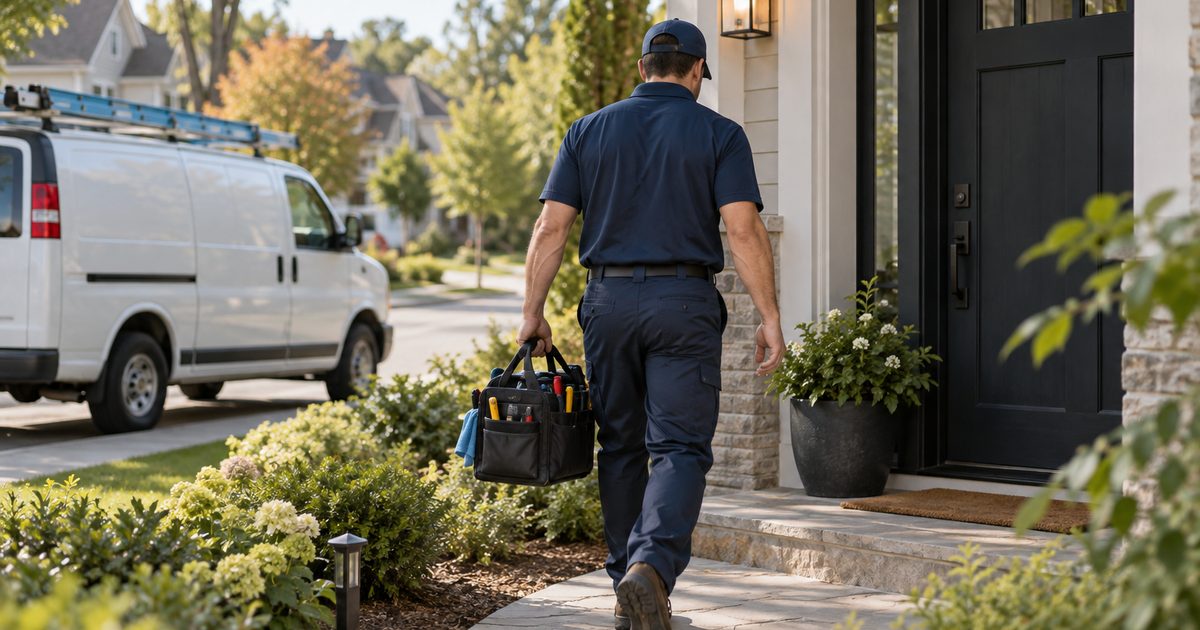
Service area marketing is how a home services business is advertised and kept visible across the whole area it serves, not just near its address. Each channel reaches that area differently, so it decides where the business appears in local results, where its ads run, and which parts of the area get the most budget.
At Riley Summers, we treat a service area as the place a business wants work and where opportunity may exist. We build coverage so customers across that area can find the business, with the most weight behind the areas its best jobs come from.
On this page
- What Service Area Marketing Is and Isn’t
- Why Marketing Coverage Changes Across the Service Area
- The Full Coverage Framework
- Service Area Marketing Compared With Other Local Marketing Topics
- How Each Marketing Channel Covers a Service Area
- Measuring Performance Across the Service Area
- Service Area Marketing Mistakes We See
- How Service Areas Differ Across Home Service Trades
- Related Resources
What Service Area Marketing Is and Isn’t
Service area marketing is about coverage. It makes sure a business that serves a wide area can be found by customers across all of it, and it puts the most budget behind the parts of that area that produce the best work. It starts from the area the business serves, or wants to serve, and looks at where its marketing reaches and where it falls short. For the owner, the question is whether customers in every part of that area can find the business when they need it.
It isn’t:
- Choosing markets. Whether a market is worth advertising in at all is covered in Market Selection.
- The business model. How local marketing works for a business that serves customers at their homes, including a profile set up without a public address, is covered in Service Area Businesses.
- Moving into new areas. Entering and building a presence in a new market is covered in Local Market Expansion.
- Website content for each area. How the website represents individual towns and markets is covered in Location Pages.
- Multiple offices. Coordinating marketing across several real business locations is covered in Multi-Location Marketing.
Why Marketing Coverage Changes Across the Service Area
A service area may be a single line on a map, but marketing doesn’t reach every part of it equally. Each channel decides who sees the business in its own way, and only some of those ways depend on where the business is located.
Local search results are where location matters most. Google says local results are based mainly on relevance, distance and prominence (Google Business Profile Help). How distance is measured depends on the search. When a customer includes a city in the search, Google measures from that place; in our experience, that’s usually the geographic center of the city. When the search has no location in it, such as a “near me” search, Google measures from the customer’s own location, which is usually where their phone is.
A business can rank strongly for customers near its address and fade from the local results farther out, even in towns it serves every week. Relevance and prominence (reviews, links, and how well known the business is) can extend that reach, but they don’t remove distance. How far that reach extends depends on the competition. In our experience, a business stays visible farther from its address where there are fewer competing businesses, or where those competitors aren’t marketing actively. In a crowded market where competitors are working on their local presence, the business can drop out of the local results much closer to home.
In our experience, the business’s location also affects how its Local Services Ads perform across the area, even though the advertiser sets the service area itself.
Paid search and paid social work differently. Their targeting is set to the area itself, so the business can be put in front of customers at the far edge of its service area as readily as those nearby, within the limits of budget and competition.
For the owner, this means the parts of the service area farthest from the office are often where the business is hardest to find. Those are the areas where paid channels earn their place.
How we help: Gaps in coverage mean customers in part of the service area never see the business, and those jobs go to whichever competitor they do see. Depending on the services a client engages us for, we look at where each channel reaches across the area, so paid coverage goes where local visibility falls short.
The Full Coverage Framework
Service area marketing works best when coverage is built in order. First decide where the business wants work, then see where it’s already visible, and only then decide where the budget goes. At Riley Summers, we use the Full Coverage Framework to keep those decisions in order.
- Draw the Area
- Map the Coverage
- Fill the Gaps
- Weight the Best Areas
- Keep It Current
1. Draw the Area
Every engagement starts with where the business wants work. That includes the areas the owner would rather not send a truck to, even if they’re technically in reach. We also compare that area with where the business’s sales actually come from. In our experience there’s usually a gap: jobs commonly cluster fairly close to the business’s location, even when the owner wants work across a much wider area. We also look at where opportunity may exist beyond the jobs the business is getting today. The owner decides where the line goes.
2. Map the Coverage
Depending on the services a client engages us for, we look at where the business is already visible and where it fades. This matters most for local search and LSAs, where the business’s location shapes how far its reach extends. It matters much less for paid search and paid social, where targeting is set to the area directly.
3. Fill the Gaps
Where local results and LSAs don’t reach well, paid search and paid social can put the business in front of customers in those parts of the area. The goal isn’t for every channel to cover everywhere. The channels work together so the area as a whole is covered.
4. Weight the Best Areas
Not every part of a service area produces the same work. Using the client’s own sales history, we find the ZIP codes that produce the most jobs and the highest-value jobs, and put more weight behind them.
5. Keep It Current
Service areas change as businesses add crews, drop services or shift their goals. We adjust coverage when the owner tells us about those changes and when we review the account with the client.
How we help: A service area that’s never reviewed tends to drift, with budget still going to areas the business no longer wants and missing the ones it does. We keep the coverage tied to where the client wants work today and where its best jobs are coming from.
Service Area Marketing Compared With Other Local Marketing Topics
Service area marketing sits alongside four neighboring local marketing topics. Each one answers a different question.
| Service Area Marketing | Market Selection | Service Area Businesses | Local Market Expansion | Multi-Location Marketing | |
|---|---|---|---|---|---|
| Main question | Can customers across the area the business serves find it? | Is this market worth advertising in? | How does local marketing work when the business goes to the customer? | How does the business start winning work in a new area? | How are several real locations marketed? |
| When it matters | Always, for any business covering more than its immediate neighborhood | Before money goes into a market | When the business has no storefront customers visit | When the business adds territory | When the business operates from more than one site |
| Main marketing challenge | Visibility that fades with distance from the business | Separating worthwhile markets from costly ones | Being found without a public address | Building visibility where the business has no history | Keeping each location visible without them competing with each other |
| Key measure | Jobs and job value by ZIP code | Whether the market produces work worth the drive | Visibility and leads from local search | Leads and booked jobs in the new area over time | Results for each location |
How Each Marketing Channel Covers a Service Area
Each channel covers a service area in its own way. What matters most for the owner is which channels can reach the parts of the area where the business is hardest to find.
| Channel | Does the business’s location matter? | What it does for service area coverage | How it’s paid |
|---|---|---|---|
| Local search and maps | Yes | Strongest near the business’s address. Reach extends with relevance and prominence, and shrinks where competition is heavy. | Free |
| Local Services Ads | Yes | Covers the service area the advertiser sets, but the business’s location still affects how it performs across that area. Appears in Google Search and Google Maps (Google Ads Help). | Pay per lead |
| Organic search | Less than in local results | Content tied to the areas the business serves can support its visibility in those areas (see Location Pages). | Free (no per-click cost) |
| Paid search | Not much | Targeting is set to the service area, so it can reach customers where local results don’t. | Pay per click |
| Paid social | Not much | Targeting is set to the area, and it reaches people before they start searching. | Paid by impression or click, depending on the campaign |
| Remarketing | No | Follows people who have already visited or engaged, kept within the service area. | Paid by impression or click |
Depending on the services a client engages us for, these channels work together. Local search and LSAs carry the areas close to the business, while paid search and paid social fill the parts of the area those channels don’t reach well. In our experience, a paid search lead from the edge of the service area performs much like one from next door. What decides the result is the intent behind the search, not where the customer is.
How we help: We often see channels overlapping in the same part of a service area while other parts go uncovered. We match each channel to the part of the area it reaches best, so the budget closes gaps instead of doubling up.
Is your business visible across your whole service area?
Riley Summers will review where your business can be found across the area you serve, and where customers are going to competitors because they can’t find you.
Measuring Performance Across the Service Area
Measuring service area marketing starts with where the business’s work comes from, not just how many leads the campaigns produce. Our standard reporting shows leads by campaign and in total. Breaking results out by area is something we do when a client asks for it. The client’s own sales history, by ZIP code, is what tells us where the best work comes from, so we ask for as much of it as the business can provide.
| Measure | What it shows | Where it comes from |
|---|---|---|
| Jobs by ZIP code | Where the business’s work is coming from | The client’s sales history |
| Job value by ZIP code | Where the most valuable work is coming from | The client’s sales history, where it includes job values |
| Leads by campaign | Which campaigns are producing inquiries | Ad platforms and call tracking (standard reporting) |
| Leads by area | Where inquiries are coming from | Available when a client asks |
| Local visibility across the area | Where the business can be found in local results | Local SEO engagements |
| Paid search visibility | How often the business’s ads appear for the searches that matter | Google Ads |
Worked example
Illustrative figures only, not a benchmark.
A business’s sales history for one year shows three areas:
- Area A, near the office: 120 jobs at an average of $400, for $48,000.
- Area B, mid-distance: 60 jobs at an average of $900, for $54,000.
- Area C, at the edge of the service area: 20 jobs at an average of $500, for $10,000.
Area A produces the most jobs, but Area B produces the most value from half as many. Weighting by job count alone would put the most budget near the office, where local results already carry the business. Weighting by value points more budget toward Area B.
Service Area Marketing Mistakes We See
These are the mistakes we most often find when we review a home services business’s coverage across its service area.
-
Marketing every part of the area equally. Serving an area isn’t the same as wanting to put equal weight behind it. Budget spread evenly across the area ends up supporting low-value areas at the expense of the best ones.
What we do instead: weight coverage toward the ZIP codes that produce the most jobs and the highest-value jobs, where the client’s sales history allows.
-
Targeting that reaches beyond the area the business wants. Ads that run in areas the owner won’t send a truck to produce leads the business turns away, and the business pays for them. We’ve seen campaigns running well outside the business’s market, and in some cases outside its state.
What we do instead: match targeting to the area agreed with the owner.
-
Expecting a listed town to bring local visibility on its own. Adding a town to a profile’s service area doesn’t remove the distance factor. A business can list a town and still be hard to find there.
What we do instead: use paid channels to cover the parts of the area where local results don’t reach.
-
Channels doubling up while parts of the area go uncovered. Several channels compete for the same customers near the office, while the edges of the area see none of them.
What we do instead: match each channel to the part of the area it reaches best.
-
Drawing the area once and never revisiting it. Crews, services and goals change, but the marketing keeps covering yesterday’s area.
What we do instead: revisit coverage when the owner tells us about changes and when we review the account.
How Service Areas Differ Across Home Service Trades
Service area marketing follows the economics of the trade. How far a business travels depends on how often it visits a customer, how fast it needs to arrive, and how much each job is worth.
| Trade | Typical service area pattern | What shapes it | Coverage priority |
|---|---|---|---|
| Pool service | Concentrated | Recurring visits on set routes | Areas where routes already run |
| Pest control | Concentrated | Recurring visits on set routes | Areas where routes already run |
| Lawn care | Concentrated | Recurring visits on set routes | Areas where routes already run |
| Plumbing | Moderate | Urgent work where response time matters | Areas a truck can reach quickly |
| HVAC | Moderate to broad | A mix of urgent repairs and high-value replacements | The full area, weighted toward the highest-value work |
| Roofing | Broad | High-value project work, sometimes widened temporarily after storms | The full area, weighted toward the highest-value work |
Two patterns
Two patterns run through most trades. Route-density businesses, such as pool service, pest control and lawn care, earn more when their customers sit close together. For them, service area marketing is about filling the routes they already run (see Route-Based Service Businesses). Job-value businesses, such as roofing and HVAC replacement, can support a wider area, because a single job is worth the longer drive. For them, it’s about reaching the whole area and weighting it toward the best work (see High-Ticket Project Marketing). These are patterns, not rules, and every business’s own sales history decides where its coverage should go.
Related Resources

About The Author
Mark Riley is a marketing executive and the founder of Riley Summers Marketing Group, where he leads customer acquisition strategy for law firms and home services businesses across paid search, Google Local Services Ads, local SEO and paid social media. He rose to VP of Digital at a national legal-marketing agency, where the digital programs he led generated a significant share of its revenue. Over a 15+ year career, he has managed more than $70 million in digital advertising spend, much of it in one of the most expensive and competitive advertising categories in North America. He measures marketing by what it costs to win a booked job, not by traffic or lead volume.