
Paid Social Advertising for Home Services Businesses
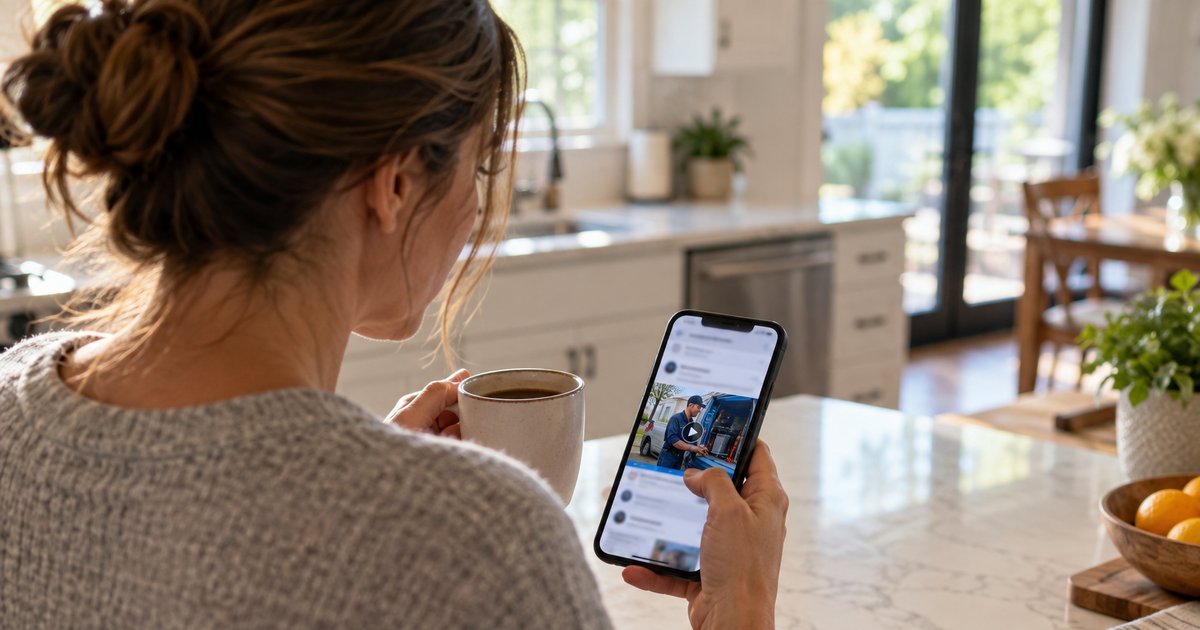
Paid social advertising is paid ads shown in people’s social media feeds. It is based on behavior and interests, not intent meaning – the ads are targeted by people’s interests and how they behave online, not by what they’re searching for in a search engine like Google. For a home services business, paid Social Media ads reach homeowners before they even start looking for a provider, so the business is already a familiar name when the need comes up. At Riley Summers, we focus our paid social work on Meta (Facebook and Instagram), and we can also run campaigns on TikTok and Reddit where a client’s audience is there.
The same customer can find a business through different channels. Here’s how each one sounds from their side:
- PPC / Paid search“I searched for AC repair and called one of the first companies listed.”
- Local Services Ads“I booked the Google-verified company at the top of the page.”
- Local search and maps“I picked the closest one on the map with good reviews.”
- Organic search“I found them in the regular search results.”
- Remarketing“Their ad kept coming up after I’d looked at their website.”
- Paid social“Their ad showed up in my feed right when I was thinking about it.”
Most homeowners don’t think about a home services business until they need one, so paid social’s core job is to make the business familiar before that moment, with lead generation campaigns running alongside for offers worth acting on now.
On this page
- What Paid Social Advertising Is and Isn’t
- Brand Campaigns and Lead Generation Campaigns
- Where Paid Social Fits by Demand Type
- When Paid Social Makes Financial Sense
- The Before They Search Framework
- Lead Forms vs. Landing Pages
- Where Paid Social Runs
- How Paid Social Works Alongside Other Channels
- Paid Social Compared with Other Channels
- How We Measure Paid Social
- Paid Social Mistakes We See
- Paid Social Across Home Services Trades
- Related Resources
What Paid Social Advertising Is and Isn’t
Paid social advertising is paid campaigns on social platforms that reach new audiences: homeowners in the business’s service area who don’t follow the business and haven’t interacted with its social media accounts before. Ads are targeted by interests and behavior, so they reach people who aren’t looking for the service yet, which makes paid social different from every search-based channel.
Paid social advertising is not:
- Remarketing. Reaching people who have already clicked an ad or visited a landing page is a separate job, even when it runs on the same platform. That’s covered in Remarketing.
- Organic social media. Posting on the business’s own Facebook or Instagram pages reaches mostly existing followers and isn’t advertising. It’s outside the scope of this page.
- Boosting posts. Boosting a post puts money behind content already on the business’s page. It’s a simplified form of paid social with limited control over who sees it and what counts as a result.
- Paid search. Search ads reach people who are already looking for the service. That’s covered in Paid Search Advertising.
Brand Campaigns and Lead Generation Campaigns
Most homeowners don’t go looking for a home services business until they need one, and few turn to social media to find one. In a survey by the Home Improvement Research Institute, only 16% of homeowners found social media useful for finding a provider. At Riley Summers, we therefore run paid social as two kinds of campaign, with brand campaigns at the core.
Brand campaigns: the core. These keep the business in front of homeowners in its service area, repeatedly, so it’s the name they recognize.
Why this matters: when a homeowner does need a service the business offers, the business they already know is the one that comes to mind first. They search for it by name, call it directly, or choose it when it appears in the search results, often ahead of competitors they’ve never heard of. The ads lead with trust: reviews, completed work, the team and the business’s local presence. We evaluate them by what happens in other channels, not by leads from the ads themselves.
Lead generation campaigns: alongside. These are built around offers worth acting on now, such as seasonal specials, maintenance plans or financing on high-ticket work. They give homeowners a simple way to respond while the offer is in front of them.
How Riley Summers helps: When evaluated only on the leads it produces directly, paid social can look weaker than it is. Run only as brand, it misses homeowners who are ready to act. We balance brand and lead generation campaigns around each client’s services, seasons and budget.
Where Paid Social Fits by Demand Type
Brand campaigns support every demand type. When a pipe bursts or the AC fails, the homeowner has no time to research, so they often call the business they already recognize or choose it from the search results. That makes brand campaigns valuable even for emergency and urgent repair work, which paid social can’t capture directly.
Lead generation campaigns suit demand that an offer can prompt.
- Strongest fit: seasonal, recurring, and maintenance and membership services. A tune-up special or a treatment plan gives a homeowner who wasn’t searching a reason to act now.
- Good fit: replacement and high-ticket projects, especially visual ones like pools, roofs and remodels, where photos of completed work and financing offers can start a decision the homeowner was already considering.
- Weak fit: emergency, urgent repair and storm-driven work. No offer can create a burst pipe, and when one happens, the homeowner searches instead of scrolling.
How Riley Summers helps: A lead generation offer that suits one service can waste budget on another. We match each campaign to the demand types it can realistically influence, and keep brand campaigns running underneath them.
When Paid Social Makes Financial Sense
Paid social isn’t the first channel we add for most clients. Brand campaigns pay off over months, not days, and their effect shows up mainly in other channels. Before we recommend paid social, we evaluate four things:
- The core channels come first. We usually put paid search in place first, because it reaches homeowners who are ready to book now. Paid social makes most sense once that demand is being captured well, so the familiarity it builds turns into searches and calls the business can win.
- Budget for a steady presence. Brand campaigns only work if homeowners see the business repeatedly over time. A budget that can only run ads for a few weeks at a time rarely builds recognition.
- Something worth showing. Reviews, photos of completed work and a recognizable local presence give brand ads substance. A business with little proof to show gets less from paid social.
- A way to see the effect. Where the client’s systems allow, we track searches for the business by name, direct calls and paid search results before and after paid social starts, so its contribution isn’t guesswork.
How Riley Summers helps: Paid social started too early, or on too small a budget, can look like money with nothing to show for it. We evaluate whether a client is ready for it, and when to add it, so it strengthens the channels already working.
The Before They Search Framework
Paid social reaches homeowners before they start searching, so it has to do its work well ahead of the moment they need the service. The Before They Search Framework is how we build and run paid social for home services businesses. It has five stages.
1. Choose the Right People
Paid social reaches whoever the targeting allows, so the audience decides how much of the budget is wasted. We define each audience by the client’s service area and by interests and behavior that fit the services being advertised. Brand campaigns reach broadly within the area, while lead generation campaigns are narrower, built around the homeowners most likely to act on a specific offer.
2. Lead With the Right Message
Brand ads and lead generation ads have different jobs, so they say different things. Brand ads lead with trust: reviews, completed work, the team and the business’s local presence. Lead generation ads lead with an offer worth acting on now, such as a seasonal special, a maintenance plan or financing on a larger job. Where ads mention financing, we use the lender’s approved wording.
3. Stop the Scroll
A homeowner scrolling their feed isn’t looking for a home services business, so the ad has to earn a pause before it can say anything. We favor real photos and video of the client’s team and work over stock imagery, formatted for how people view each placement on their phones. We also refresh the ads before the same people have seen them too often to notice.
4. Make It Easy to Respond
For lead generation campaigns, the step after the ad decides whether interest becomes a lead. We make responding simple, whether by calling or by submitting a short form, and we connect that step to the client’s follow-up where their systems allow. Leads from social ads go cold fast, so the speed of the business’s response matters as much as the ad.
5. Measure Booked Jobs
Both campaign types are measured by booked jobs in the end. For lead generation, that means tracking which leads became booked work, where the client’s CRM allows. For brand campaigns, it means looking for lift in other channels, such as more searches for the business by name, more direct calls and better paid search results. Part of that credit goes to paid social. That’s covered in How We Measure Paid Social below.
How Riley Summers helps: Paid social run without a plan tends to produce reach that’s hard to connect to revenue. We run each stage so brand campaigns build recognition in the right area and lead generation campaigns turn that recognition into booked jobs.
Lead Forms vs. Landing Pages
A lead generation campaign on social can collect leads in two ways, and the choice shapes both how many leads come in and how many turn into jobs.
Lead forms inside the platform. The homeowner taps the ad and a form opens without leaving Facebook or Instagram, often with their name and contact details already filled in. That makes it easy to respond, so these forms tend to produce more leads. It also makes it easy to respond without much thought, so more of those leads may never answer the phone.
Dedicated landing pages. The homeowner taps through to a page built for that offer, where they can read more, see proof of the business’s work, and call or submit a form. That extra step means fewer leads, but those who respond have taken more time over the decision. Landing page visits can also build audiences for remarketing.
How Riley Summers helps: A campaign that produces lots of cheap leads can still produce few booked jobs. We set up paid social for the kind of lead that turns into work for each client, and where the client’s systems allow, we connect social leads to their CRM so every lead gets a fast response.
Where Paid Social Runs
At Riley Summers, we focus our paid social work on Meta, which covers Facebook and Instagram. Each placement reaches homeowners in a different part of the app:
- Feeds. Ads appear between posts as homeowners scroll Facebook or Instagram. Feeds suit both brand and lead generation campaigns, with room for a photo or video and a short message.
- Stories. Full-screen, vertical ads between the stories people view on Facebook and Instagram. They’re brief, so they suit a strong image or short video with a single message.
- Reels. Short vertical videos in Facebook and Instagram’s video feeds. They suit real footage of the team or completed work, which helps brand campaigns feel less like advertising.
We can also run campaigns on TikTok and Reddit for a client whose customers use those platforms.
How much paid social costs depends on how the campaign is set up and what it’s optimizing for. Most brand campaigns are priced by the number of times the ads are shown, while lead generation campaigns are often measured by cost per click or per lead.
How Riley Summers helps: Each placement suits different content, and the same ad rarely works everywhere. We format ads for each placement and move budget toward the placements that reach the client’s customers at the lowest cost.
How Paid Social Works Alongside Other Channels
Paid social does most of its work through the other channels. Brand campaigns build recognition before the homeowner needs the service, and the search-based channels capture that homeowner when they do.
- Paid search. A homeowner who already recognizes the business is more likely to search for it by name, or to choose its ad over a competitor’s when they search for the service. Paid search is where much of the demand that paid social builds gets captured.
- Local Services Ads and local search and maps. When a homeowner compares several businesses side by side, a familiar name stands out among ones they’ve never seen before.
- Remarketing. Homeowners who click a social ad and visit a landing page, or engage with an ad without clicking, can be reached again while they decide.
- Organic search. Recognition built on social can make homeowners more likely to click the business’s listing in the regular search results.
This extends the screen real estate argument on our other channel pages. A business that appears in the LSAs, the paid ads and the local 3-pack can hold several of the first positions on the results page. Paid social means that when the homeowner reaches that page, the name in those positions is one they have already seen in their feed, often more than once.
How Riley Summers helps: Paid social evaluated on its own misses most of what it contributes. Depending on the services a client engages us for, we run paid social alongside their search channels and look at the results together, so each channel gets the right share of the credit.
Paid Social Compared with Other Channels
No channel is best for every business. Each one reaches the customer at a different point, and most home services businesses do best with two or three working together.
| Channel | How it’s paid for | Speed to first leads | Control over which jobs you get | Customer intent | Best used for |
|---|---|---|---|---|---|
| Paid social | Usually per impression | Varies: lead generation campaigns can produce leads quickly, while brand campaigns build recognition over months | Moderate: audience, but not intent | Low: not searching yet | Building brand recognition in your target markets |
| Paid search | Per click | Days, after a short learning period | High: services, searches, areas and hours | High: actively searching | Winning ready-to-book customers, service by service |
| Local Services Ads | Per lead | Varies: can be quick once verified, but slow for businesses with few reviews, a weak Business Profile or a history of missed calls and unrated leads | Moderate: job types, area and hours, but Google matches the searches | High: actively searching | Urgent and emergency calls, backed by strong reviews |
| Local search and maps | No cost per call, but reaching the top three map results takes ongoing local SEO investment. Paid ads can also appear in the map results. | Slow to build | Low: earned through proximity, relevance and reviews | High: looking nearby | Steady local visibility once rankings are earned |
| Organic search | No cost per visit, but content, internal linking, site speed and link building are ongoing costs | Months | Low to moderate | Mixed: research to ready | Long-term visibility and research-stage customers |
| Remarketing | Per click or per impression | Varies: audiences have to reach Google’s minimum size before ads can run, and customers who aren’t ready yet can take weeks or months to book | Moderate: who sees the ads | Moderate: has already shown interest | Staying in front of customers with long decision windows |
Paid social is the one channel here that reaches homeowners before they need the service. We add it once the search channels are capturing demand well, so the recognition it builds turns into searches and calls the business can win.
Is your social advertising building your business, or just your reach?
Riley Summers will review your paid social campaigns: whether your ads are reaching the right homeowners in your service area, whether your brand and lead generation campaigns are doing different jobs, and whether your social spend is showing up in searches, calls and booked jobs.
How We Measure Paid Social
Because paid social runs as two kinds of campaign, we measure it in two ways, and both lead back to booked jobs.
Lead generation campaigns are measured like paid search: by the leads they produce, which of those leads became booked jobs where the client’s CRM allows, and what each booked job cost.
Brand campaigns are evaluated by their effect on other channels. We compare searches for the business by name, direct calls and paid search results before and after brand campaigns start, against the same season in earlier years to account for normal seasonal change. When those channels improve without another explanation, part of that credit goes to paid social. It’s an informed estimate, not proof, and we report it that way.
| Metric | What it tells us |
|---|---|
| Reach and frequency in the service area | How many homeowners in the target market are seeing the ads, and how often |
| Searches for the business by name | Whether more homeowners are looking for the business specifically |
| Direct calls | Whether more homeowners are calling the business without going through an ad |
| Paid search results in the service area | Whether search ads are converting better as recognition grows |
| Leads from lead generation campaigns | Whether offers are prompting homeowners to respond |
| Booked jobs and cost per booked job | What paid social is producing in real work, where the client’s CRM allows |
Worked example
Illustrative figures only, not a benchmark.
A business spends $1,500 a month on paid social: $1,000 on brand campaigns and $500 on a seasonal lead generation offer. The lead generation campaign produces 10 leads, and 4 become booked jobs, so each booked job costs $125. Over the following months, searches for the business by name rise from 200 a month to 260, compared with the same season a year earlier, and nothing else in the business’s marketing has changed. That 30% increase is credited in part to the brand campaigns.
How Riley Summers helps: Social platforms report reach and engagement, which say little about revenue. We report paid social against booked jobs and its effect on the client’s other channels, so the decision to keep spending is based on results the business can see.
Paid Social Mistakes We See
These are the mistakes we look for when we review a business’s paid social advertising.
1. Evaluating paid social on reach, engagement or cheap leads
The report shows thousands of people reached and leads at a low cost, but nobody checks whether any of it became booked work.
What we do instead: measure lead generation by booked jobs, and brand campaigns by their effect on searches, calls and paid search results.
2. Running lead generation with no brand campaigns underneath
Every ad asks homeowners to act now, but most aren’t ready, so the business spends to reach them without building any recognition for later.
What we do instead: run brand campaigns as the core, with lead generation campaigns alongside for offers worth acting on.
3. Boosting posts instead of running campaigns
Money goes behind whatever the business posted, with little control over who sees it or what counts as a result.
What we do instead: build campaigns with a defined audience, message and goal for each one.
4. Reaching the wrong people
Ads reach people outside the service area, or an audience so narrow the campaign can barely run.
What we do instead: define each audience by the client’s service area and by interests and behavior that fit the services being advertised.
5. Ads that look like every other ad
Stock photos and generic claims give homeowners no reason to stop scrolling, and nothing to remember the business by.
What we do instead: favor real photos and video of the client’s team and completed work.
6. Running the same ads for too long
The same homeowners see the same ad so often that they stop noticing it, and results decline.
What we do instead: refresh ads before the audience has seen them too often to notice.
7. Slow follow-up on social leads
A homeowner responds to an offer, then hears nothing for a day, by which time their interest has faded.
What we do instead: connect social leads to the client’s follow-up where their systems allow, so every lead gets a fast response.
Paid Social Across Home Services Trades
The trade matters less than the demand the business is trying to win. Brand campaigns do the same job everywhere, while the right lead generation offer depends on the service.
| Trade | Demand type | What brand campaigns do | Lead generation offer that fits |
|---|---|---|---|
| Plumbing | Emergency | Make the business the name homeowners recognize when a pipe bursts | Limited: no offer creates a burst pipe |
| HVAC | Maintenance and membership | Keep the business familiar between service visits and system failures | A pre-season tune-up or maintenance plan |
| Pest control | Recurring service | Build recognition in the neighborhoods the business serves most | A recurring treatment plan |
| Lawn care | Seasonal service | Keep the business in mind before the growing season starts | Spring clean-up or aeration and overseeding |
| Roofing | Replacement | Show completed roofs and reviews, so the business is on the shortlist when a replacement comes up | Financing on a roof replacement |
| Pool construction | High-ticket project | Show finished pools to homeowners who may be considering one | A design consultation or financing offer |
Two patterns hold across trades. First, brand campaigns earn their place in every trade, because every homeowner eventually needs a service, and the business they already recognize has the advantage when that happens. Second, lead generation campaigns work best where an offer can prompt a decision, such as a seasonal service, a recurring plan or a financed project, and add little where the need arrives without warning.
Related Resources

About The Author
Mark Riley is a marketing executive and the founder of Riley Summers Marketing Group, where he leads customer acquisition strategy for home services businesses across paid search, Google Local Services Ads, local SEO and paid social media. He rose to VP of Digital at a national legal-marketing agency, where the digital programs he led generated a significant share of its revenue. Over a 15+ year career, he has managed more than $70 million in digital advertising spend, much of it in one of the most expensive and competitive advertising categories in North America. He measures marketing by what it costs to win a booked job, not by traffic or lead volume.